 It's Ours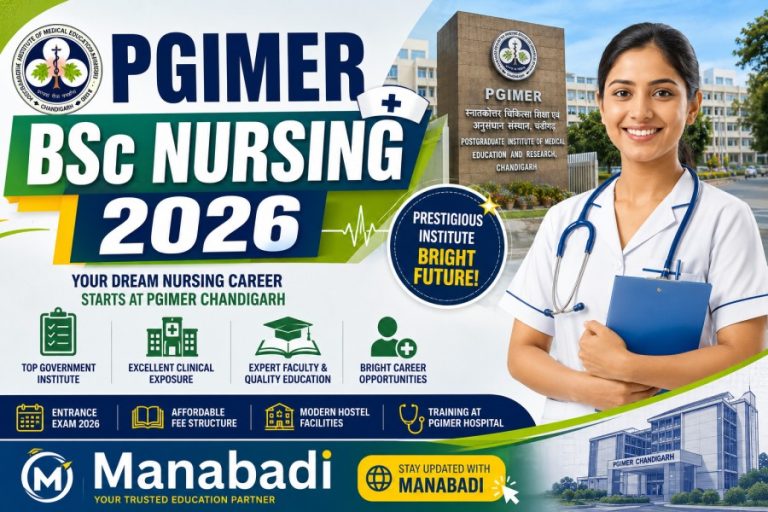
Contents
- 1 PGIMER B.Sc Nursing Result 2026 Out
- 1.1 How to Check PGIMER B.Sc Nursing Result 2026
- 1.2 Next Important Dates
- 1.3 PGIMER B.Sc Nursing 2026 Highlights
- 1.4 PGIMER B.Sc Nursing 2026 Result
- 1.5 How to Check PGIMER B.Sc Nursing Result
- 1.6 Important Dates
- 1.7 Why Choose PGIMER Chandigarh?
- 1.8 PGIMER B.Sc Nursing Admission Process
- 1.9 Eligibility Criteria
- 1.10 Seat Matrix
- 1.11 Reservation Policy
- 1.12 Fee Structure
- 1.13 Counselling Process
- 1.14 Documents Required for Counselling
- 1.15 Merit List
- 1.16 Expected Cut-Off 2026
- 1.17 Previous Year Cut-Off
- 1.18 Exam Pattern
- 1.19 Detailed Syllabus
- 1.20 Previous Year Question Papers
- 1.21 Best Books
- 1.22 Campus & Hostel Facilities
- 1.23 Clinical Training & Internship
- 1.24 Career Opportunities
- 1.25 Salary After B.Sc Nursing
- 1.26 Frequently Asked Questions
PGIMER B.Sc Nursing Result 2026 Out
PGIMER B.Sc Nursing Result 2026 has been released today, August 10, 2026. Candidates who appeared for the entrance examination can now check their result online through the official PGIMER website. Qualified candidates will be considered for the next stage of the admission process, including document verification and counselling.
Stay connected with Manabadi for the latest PGIMER B.Sc Nursing 2026 updates, including the result, counselling schedule, seat allotment, and admission announcements.
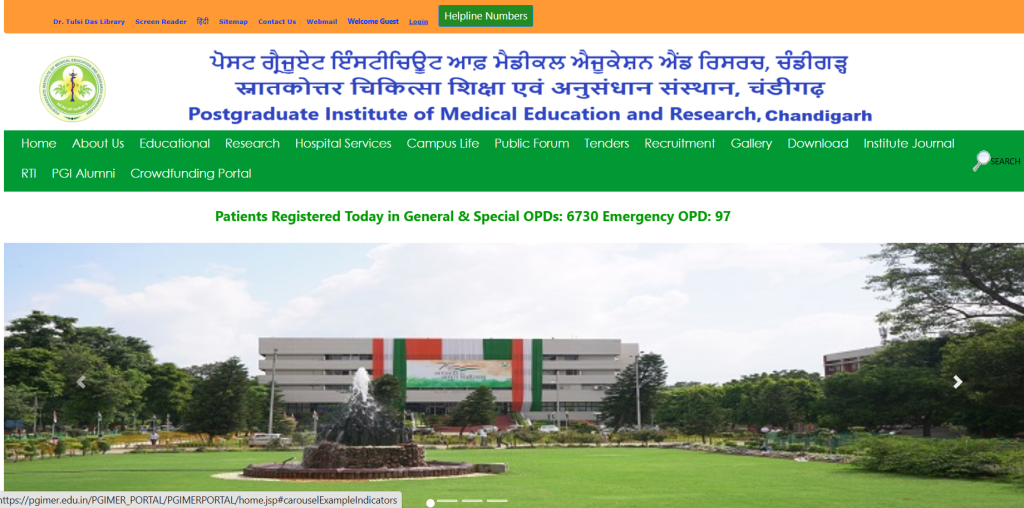
PGIMER B.Sc Nursing Result 2026 has been declared on August 10, 2026. The Postgraduate Institute of Medical Education and Research (PGIMER), Chandigarh, has released the result for candidates who appeared for the PGIMER B.Sc Nursing Entrance Examination 2026, conducted on July 24, 2026. Candidates can check their result through the official PGIMER website using their login credentials. The result contains important details such as the candidate’s marks, percentile/rank and qualifying status, while eligible candidates will proceed to the subsequent counselling and admission process. Candidates are advised to download and preserve their result for future admission formalities.
How to Check PGIMER B.Sc Nursing Result 2026
- Visit the official PGIMER website.
- Go to the Information for Candidates/Admissions section.
- Click on the PGIMER B.Sc Nursing Result 2026 link.
- Enter the required User ID and Password/Login credentials.
- Submit the details.
- Your PGIMER B.Sc Nursing result/scorecard will appear on the screen.
- Check your marks, percentile/rank and qualifying status.
- Download and save the result.
- Take a printout for the counselling and admission process.
Next Important Dates
The counselling schedule is particularly important now that the result is out.
| Event | Date |
|---|---|
| PGIMER B.Sc Nursing Entrance Exam | July 24, 2026 |
| PGIMER B.Sc Nursing Result | August 10, 2026 |
| Document Verification – Post Basic B.Sc Nursing | August 13, 2026 |
| Counselling – Post Basic B.Sc Nursing | August 14, 2026 |
| Document Verification – B.Sc Nursing (4 Years) | August 17, 2026 |
| Counselling – B.Sc Nursing (4 Years) | August 18, 2026 |
| Last Date for Admission | September 30, 2026 |
The published 2026 schedule lists document verification for Post-Basic candidates on August 13 and counselling on August 14, followed by document verification for the 4-year B.Sc Nursing programme on August 17 and counselling on August 18.
PGIMER B.Sc Nursing 2026 Highlights
| Particular | Details |
|---|---|
| Institute | PGIMER Chandigarh |
| Course | B.Sc Nursing (4-Year) + B.Sc Nursing (Post-Basic, 2-Year) |
| Academic Session | 2026–27 |
| Admission Mode | Entrance Exam (Institute-level CBT) |
| Exam Mode | Computer-Based Test (CBT) |
| Exam Date | 24 July 2026 |
| Total Seats | 93 (4-Year, female only) + 62 (Post-Basic, co-ed) = 155 |
| Result Status | Awaited |
| Counselling | After result (DV: 17 August; Choice Allocation: 18 August) |
| Official Website | pgimer.edu.in |
PGIMER B.Sc Nursing 2026 Result
- Result Status: Awaited as of now; the exam has already been conducted.
- Expected Result Date: Around 10 August 2026.
- Direct Result Link: (will be updated here the moment it goes live)
- Merit List PDF: Released along with the result, containing category-wise qualified candidates.
- Score Card Download: Available immediately after login once the result is declared.
- Rank Card: Issued along with the scorecard, showing All India Rank and category rank.
- Login Credentials Required: Application number/roll number and password/date of birth.
How to Check PGIMER B.Sc Nursing Result
- Visit the official PGIMER website.
- The “PGIMER B.Sc Nursing Result 2026” link is clicked once activated.
- Login is completed using the roll number/application number and password/date of birth.
- The scorecard showing marks, rank, and qualifying status is displayed.
- A printed copy is taken and safely kept for the counselling process.
Important Dates
| Event | Date |
|---|---|
| Notification Release | 1 June 2026 (Notice No. 06/2026) |
| Applications Started | 1 June 2026 |
| Last Date to Apply | 30 June 2026 |
| Admit Card Release | Mid-July 2026 |
| Exam Date | 24 July 2026 |
| Answer Key Release | Last week of July 2026 |
| Result Date | Around 10 August 2026 (Expected) |
| Counselling (Document Verification) | 17 August 2026 |
| Choice Allocation | 18 August 2026 |
| Seat Allotment | To be announced after choice allocation |
| Reporting/Admission | To be announced after seat allotment |
Why Choose PGIMER Chandigarh?
- Prestigious Institute: PGIMER is widely regarded as one of India’s top medical institutions, ranked consistently among the country’s best in nursing and medical education.
- Experienced Faculty: Nursing education is delivered by highly qualified faculty with strong clinical and academic backgrounds.
- Clinical Exposure: Direct access to a very high-volume, multi-specialty tertiary hospital offers unmatched hands-on training compared to most nursing colleges in India.
- Research Opportunities: Students get exposure to ongoing clinical and nursing research at one of India’s premier research-driven medical institutes.
- Strong Career Prospects: A PGIMER B.Sc Nursing degree carries significant weight in both government and private-sector recruitment across India and abroad.
PGIMER Chandigarh NIRF Ranking
PGIMER Chandigarh consistently ranks among the top medical institutions in India in the National Institutional Ranking Framework (NIRF) published by the Ministry of Education.
Institute of National Importance
PGIMER Chandigarh has been declared an Institute of National Importance (INI) by an Act of Parliament.
What This Means – Being an Institute of National Importance signifies that PGIMER plays a crucial role in advancing medical education, healthcare services, and biomedical research in India. The institute receives strong support from the Government of India and maintains exceptionally high standards in academics, clinical practice, and research.
Institute of Nursing Education (INE), PGIMER
The Institute of Nursing Education (INE) is the dedicated nursing college of PGIMER Chandigarh. It offers professional nursing education with a strong emphasis on clinical competence, patient-centered care, ethical practice, leadership, and research.
Programs Offered –
- B.Sc. Nursing
- B.Sc. Nursing (Post Basic)
- M.Sc. Nursing
- Ph.D. Nursing (as offered by the institute)
Why PGIMER graduates are highly valued: Employers recognize PGIMER Chandigarh for its rigorous training, extensive clinical exposure, research-oriented education, and high academic standards, making its graduates competitive for opportunities across India and internationally.
PGIMER B.Sc Nursing Admission Process
- Application
- Entrance Exam
- Result
- Merit List
- Counselling
- Document Verification
- Seat Allotment
- Admission Confirmation
Eligibility Criteria
Educational Qualification: Candidates must have passed Class 12 (10+2) with Physics, Chemistry, Biology, and English.
Subjects Required: Physics, Chemistry, Biology (PCB), and English are compulsory subjects at the 10+2 level.
Minimum Marks: A minimum of 45% aggregate is required in PCB for General/OBC/EWS candidates; 40% aggregate is required for SC/ST candidates.
Age Limit: No upper age limit is prescribed; candidates are required to fulfil the qualification and course-specific eligibility norms only.
Nationality: Indian nationals are eligible; a limited number of seats are also available for Foreign Nationals/NRI candidates under a separate category.
Medical Fitness: Candidates are required to be medically fit, and colour-blind candidates are being permitted provided they use colour-corrective lenses or spectacles, as clarified by PGIMER.
Course-specific note: The 4-Year B.Sc Nursing programme is open only to female candidates, while the Post-Basic B.Sc Nursing (2-Year) programme is co-ed and open to registered nurses (GNM-qualified) of either gender.
Seat Matrix
| Programme | Total Seats |
|---|---|
| B.Sc Nursing (4-Year) | 93 |
| B.Sc Nursing (Post-Basic, 2-Year) | 62 |
| Total | 155 |
Category-wise Seats (4-Year B.Sc Nursing, indicative distribution based on standard Central Government reservation norms):
| Category | Reservation % | Approx. Seats |
|---|---|---|
| Unreserved (UR) | – | 38 |
| EWS | 10% | 9 |
| OBC | 27% | 25 |
| SC | 15% | 14 |
| ST | 7.5% | 7 |
| PwBD (Horizontal) | 5% | Within above categories |
Note: PGIMER has not separately published a category-wise seat breakup for this cycle. The figures above are indicative, calculated by applying the standard Central Government reservation percentages to the total 93 seats, and are subject to confirmation from the final seat matrix released at the time of counselling.
Previous Year Seat Intake: Seat intake for the 4-Year programme has remained stable at 93 seats in recent admission cycles, while post-basic seats have generally ranged between 60 and 65.
Reservation Policy
- General/Unreserved (UR): No reservation benefit; open competition category.
- EWS: 10% horizontal-vertical reservation for Economically Weaker Sections, subject to a valid EWS certificate.
- OBC: 27% reservation for Other Backward Classes (non-creamy layer), as per Central List.
- SC: 15% reservation for Scheduled Castes.
- ST: 7.5% reservation for Scheduled Tribes.
- PwBD: 5% horizontal reservation across all categories for Persons with Benchmark Disabilities, with PGIMER accepting locomotor disability of the lower extremity between 40% and 50%, certified by an authorized medical board.
Fee Structure
| Component | Amount |
|---|---|
| Application Fee (General/OBC) | ₹1,500 |
| Application Fee (SC/ST) | ₹1,200 |
| Application Fee (PwBD) | Exempted (as applicable) |
| Total Tuition Fee (4-Year Course) | ₹10,500 (approx., for the full programme) |
| Hostel Fee | Charged separately at the time of admission |
| Security Deposit | Refundable, charged at admission |
| Examination Fee | Included in tuition/admission fee structure |
| Other Charges | Caution money, library fee, and miscellaneous charges collected at reporting |
The academic fee structure is being finalized and confirmed by PGIMER at the time of admission/counselling; the tuition fee at PGIMER is nominal, since it is a government institute, and hostel/mess charges typically form the larger part of overall annual expenditure.
Counselling Process
Registration → Choice Filling → Seat Allotment → Document Verification → Medical Examination → Admission
Counselling for PGIMER B.Sc Nursing is being conducted directly by the institute (not through a centralized DGHS/MCC-style portal), with document verification scheduled for 17 August 2026 and choice allocation for 18 August 2026, based on the current cycle’s dates.
Documents Required for Counselling
- Class 10th Certificate (for DOB proof)
- Class 12th Marks Memo/Certificate
- Admit Card of the entrance exam
- Rank Card/Scorecard
- Identity Proof (Aadhaar/Passport/Voter ID)
- Category Certificate (SC/ST/OBC-NCL/EWS), where applicable
- Medical Fitness Certificate
- Passport-size Photographs (multiple copies)
- Migration Certificate (if applicable)
- Nursing Registration Certificate (for Post-Basic candidates, along with GNM certificate)
Merit List
Merit Preparation: The merit list is prepared strictly on the basis of marks scored in the entrance exam, arranged in descending order.
Tie-Breaking Rules: In case of equal marks, tie-breaking is generally resolved using criteria such as higher marks in Biology, followed by higher marks in Chemistry, and then older date of birth, as per the institute’s standard practice.
Category-wise Merit: Separate merit lists are prepared for UR, EWS, OBC, SC, ST, and PwBD candidates.
Waiting List: A waiting list is released alongside the main merit list to fill seats vacated due to non-reporting, withdrawal, or cancellation during the admission process.
Expected Cut-Off 2026
| Category | Expected Cut-off (out of 100) |
|---|---|
| General | 65–72 |
| OBC | 58–64 |
| EWS | 60–66 |
| SC | 45–52 |
| ST | 38–46 |
| PwBD | 35–45 |
These figures are being presented as trend-based estimates derived from recent-cycle patterns and are not official; the actual cut-off depends on that year’s paper difficulty and number of applicants, and is released only along with the official result.
Previous Year Cut-Off
| Year | General (Approx.) | OBC (Approx.) | SC (Approx.) | ST (Approx.) |
|---|---|---|---|---|
| 2025 | 68–74 | 60–66 | 46–53 | 40–47 |
| 2024 | 66–72 | 58–64 | 45–51 | 38–45 |
| 2023 | 64–70 | 56–62 | 43–50 | 37–44 |
Trend Analysis: Cut-off marks at PGIMER have shown a mild upward trend over the last three cycles, reflecting a steady rise in the number of applicants competing for the fixed pool of 93 seats each year. General and OBC category cut-offs typically stay closer together, while SC/ST cut-offs remain noticeably lower due to relaxed qualifying norms.
Exam Pattern
| Subject | Questions | Marks | Duration | Negative Marking |
|---|---|---|---|---|
| Physics | ~20 | ~20 | ||
| Chemistry | ~20 | ~20 | ||
| Biology | ~30 | ~30 | ||
| English | ~15 | ~15 | ||
| General Knowledge/Current Affairs | ~15 | ~15 | ||
| Total | 100 | 100 | 90 minutes | -0.25 per wrong answer |
The exam is conducted as a Computer-Based Test with objective-type MCQs at the 10+2 (Class 11 & 12) level, in English medium only.
Detailed Syllabus
Physics: Mechanics, Heat & Thermodynamics, Optics, Electricity & Magnetism, Modern Physics – based on NCERT Class 11 & 12.
Chemistry: Physical Chemistry (atomic structure, chemical bonding, thermodynamics), Organic Chemistry (hydrocarbons, biomolecules), Inorganic Chemistry (periodic table, coordination compounds).
Biology: Human Physiology, Genetics, Cell Biology, Reproduction, Ecology, Plant Physiology – with a strong emphasis on Human Physiology given its relevance to nursing.
English: Grammar, comprehension passages, vocabulary, one-word substitution, sentence correction, and synonyms/antonyms.
General Knowledge: Static GK covering history, geography, polity, and general science.
Current Affairs: National and international events, health sector updates, government schemes, and recent developments in the medical/nursing field over the preceding 6–12 months.
Previous Year Question Papers
Solving PGIMER B.Sc Nursing previous year papers is being recommended as one of the most effective preparation tools, since PGIMER does not release an official syllabus and relies purely on the 10+2 curriculum. Benefits of practicing PYQs include better familiarity with the difficulty level and question style typically followed by PGIMER, identification of the most frequently tested topics within Biology and Physiology, and improved speed for the 90-minute time limit. Aspirants are advised to solve at least the last 3–4 years’ papers under timed conditions before attempting fresh mock tests.
Best Books
| Book | Author | Subject |
|---|---|---|
| NCERT Physics (Class 11 & 12) | NCERT | Physics |
| NCERT Chemistry (Class 11 & 12) | NCERT | Chemistry |
| NCERT Biology (Class 11 & 12) | NCERT | Biology |
| Objective Biology | Dinesh/Trueman’s | Biology |
| Objective General English | S.P. Bakshi | English |
| Lucent’s General Knowledge | Lucent Publications | General Knowledge |
| Manorama Yearbook | Malayala Manorama | Current Affairs |
Campus & Hostel Facilities
- Girls Hostel: Separate, secure hostel accommodation is provided for female B.Sc Nursing students within the PGIMER campus.
- Library: A well-stocked central library and nursing college library are accessible to students, with reference books, journals, and digital resources.
- Laboratories: Dedicated labs for Anatomy, Physiology, Microbiology, and Nursing Foundations are available for practical training.
- Clinical Training: Direct access to PGIMER’s own multi-specialty hospital for hands-on clinical exposure from early years of the course.
- Sports: Indoor and outdoor sports facilities are available within the campus for student recreation.
- Mess: Common hostel mess facility is provided, with charges collected separately from tuition fee.
Clinical Training & Internship
Hospitals: Clinical postings are conducted at PGIMER’s own tertiary-care hospital, which is among the largest and most advanced multi-specialty government hospitals in North India.
Departments: Postings typically cover Medical-Surgical wards, Paediatrics, Obstetrics & Gynaecology, Psychiatry, Community Health, ICU, and Emergency/Casualty.
Hands-on Training: Students get exposure to a very high daily patient inflow at PGIMER, offering significantly more practical case exposure compared to many other nursing colleges.
Internship: A mandatory clinical internship is completed in the final year, involving supervised rotations across major hospital departments before final qualification.
Career Opportunities
- Government Hospitals: State and central government hospitals across India regularly recruit through Nursing Officer exams.
- AIIMS: Graduates are eligible to appear for AIIMS NORCET and similar recruitment exams at various AIIMS institutes.
- ESIC: Employees’ State Insurance Corporation hospitals recruit Nursing Officers through dedicated exams.
- Railways: Indian Railways recruits nursing staff for railway hospitals through RRB-conducted exams.
- Army: Armed Forces Medical Services (AFMS) recruits nursing graduates as Military Nursing Service (MNS) officers.
- Private Hospitals: Leading private hospital chains actively recruit PGIMER-trained nurses, given the institute’s reputation.
- Higher Studies: Graduates can pursue M.Sc Nursing, further specializing in areas such as Critical Care, Oncology, or Community Health Nursing.
- Abroad Opportunities: With additional licensing exams (such as NCLEX-RN for the USA or OET/CBT for UK, Gulf countries), PGIMER graduates are well-positioned for international nursing careers.
Salary After B.Sc Nursing
| Sector | Approx. Monthly Salary |
|---|---|
| Government (Entry-level Nursing Officer) | ₹45,000 – ₹62,000 (Level 7 Pay Matrix + allowances) |
| Private Hospitals (Entry-level) | ₹18,000 – ₹35,000 (varies significantly by hospital and city) |
| Gulf/Middle East (Staff Nurse) | ₹80,000 – ₹1,50,000+ (post-licensing) |
Career Growth: Staff Nurse/Nursing Officer → Senior Nursing Officer → Nursing Superintendent → Chief Nursing Officer, with promotions generally tied to years of service and departmental vacancies.
Frequently Asked Questions
Q1. When will the PGIMER B.Sc Nursing 2026 result be declared?
The result is expected to be declared around 10 August 2026, based on the current admission schedule.
Q2. How can I check my PGIMER B.Sc Nursing result?
The result can be checked by logging into the official PGIMER website using the roll number/application number and password.
Q3. What is the counselling process for PGIMER B.Sc Nursing?
Counselling involves document verification followed by choice allocation, conducted directly by PGIMER, currently scheduled for 17 and 18 August 2026 respectively.
Q4. What is the seat matrix for PGIMER B.Sc Nursing?
There are 93 seats for the 4-Year B.Sc Nursing programme (female only) and 62 seats for the Post-Basic B.Sc Nursing programme (co-ed), totaling 155 seats.
Q5. What is the fee structure at PGIMER for B.Sc Nursing?
The total tuition fee for the 4-year programme is approximately ₹10,500, with hostel and mess charges collected separately at the time of admission.
Q6. Is hostel accommodation available for B.Sc Nursing students?
Yes, separate hostel accommodation for female students is provided within the PGIMER campus.
Q7. What documents are required for counselling?
Class 10th and 12th certificates, admit card, rank card, ID proof, category certificate (if applicable), medical fitness certificate, and passport-size photographs are required.
Q8. Is there a waiting list for PGIMER B.Sc Nursing admission?
Yes, a waiting list is released along with the main merit list to fill seats vacated during the admission process.
Q9. What is the expected cut-off for PGIMER B.Sc Nursing 2026?
The expected cut-off is around 65–72 marks for General category and lower for reserved categories, based on trend analysis of recent cycles.
Q10. When will classes begin at PGIMER for the new session?
Classes are generally expected to begin shortly after final seat allotment and reporting, typically in late August or September, though the exact date will be confirmed by PGIMER.
Q11. Is PGIMER B.Sc Nursing open to male candidates?
The 4-Year B.Sc Nursing programme is open only to female candidates; the Post-Basic B.Sc Nursing (2-Year) programme is co-ed.
Q12. What is the minimum eligibility percentage required?
A minimum of 45% aggregate in PCB is required for General/OBC/EWS candidates, and 40% for SC/ST candidates.
Q13. Is there negative marking in the PGIMER entrance exam?
Yes, 0.25 marks are deducted for every wrong answer.
Q14. What is the duration of the PGIMER B.Sc Nursing entrance exam?
The exam duration is 90 minutes for 100 MCQs.
Q15. Can NIOS (National Open School) students apply?
Yes, candidates from NIOS and equivalent recognized boards are eligible, provided they have the required science subjects and aggregate marks.
Q16. Is there an age limit for PGIMER B.Sc Nursing?
No upper age limit is prescribed for this programme.
Q17. What subjects are covered in the entrance exam?
Physics, Chemistry, Biology, English, and General Knowledge/Current Affairs are covered.
Q18. Is PGIMER B.Sc Nursing a good option compared to AIIMS Nursing?
Both are considered highly prestigious; PGIMER offers strong clinical exposure through its own large multi-specialty hospital, similar in reputation to AIIMS institutes.
Q19. How many candidates typically compete for PGIMER B.Sc Nursing seats?
Thousands of candidates apply each year for the limited 93 seats, making it one of the most competitive nursing entrance exams in India.
Q20. Can candidates awaiting Class 12 results apply?
Yes, candidates appearing in the 10+2 exam in the same year can apply provisionally, subject to submitting their final marksheet within the specified period after result declaration.
Q21. What is the application fee for PGIMER B.Sc Nursing?
₹1,500 for General/OBC candidates and ₹1,200 for SC/ST candidates.
Q22. Does PGIMER provide reservation for PwBD candidates?
Yes, 5% horizontal reservation is provided for Persons with Benchmark Disabilities, subject to specified disability criteria and certification.
Q23. What is the starting salary after PGIMER B.Sc Nursing in a government job?
Approximately ₹45,000–₹62,000 per month at entry level in government postings, depending on pay level and posting location.
Q24. Can PGIMER B.Sc Nursing graduates work abroad?
Yes, after clearing relevant international licensing exams such as NCLEX-RN (USA) or OET (UK/Gulf), graduates are eligible for overseas nursing positions.
Q25. Is the PGIMER B.Sc Nursing syllabus officially released?
No, PGIMER does not release a separate detailed syllabus; the exam is based on the standard 10+2 (Class 11 & 12) NCERT curriculum for PCB, English, and GK.
The PGIMER B.Sc Nursing 2026 admission process is entering its most important phase with the result announcement and counselling approaching. Candidates should keep their documents ready and regularly check for official updates to avoid missing any deadlines.
Bookmark this page and stay connected with Manabadi for the direct result link, merit list, counselling schedule, seat allotment, fee details, and every latest PGIMER B.Sc Nursing 2026 update-all in one place.