The Parliamentary Standing Committee on Education, Women, Children, Youth and Sports is meeting today, July 1, 2026, to review the conduct of the NEET UG 2026 re-examination and examine the reforms being implemented to strengthen the National Testing Agency (NTA). The meeting comes weeks after the original NEET UG 2026 exam was cancelled following a major paper leak controversy, and marks the first sitting of the committee under its newly appointed chairman.
This is a significant accountability checkpoint in a controversy that has dominated India’s medical entrance exam landscape this year – directly affecting the admission timelines of over 22.8 lakh candidates.
When it comes to major exam-related developments in India, students, parents, and educators alike rely on Manabadi to make sense of fast-moving, high-stakes news – and few stories this year have been as closely watched as the NEET UG 2026 controversy. From the exam cancellation to the re-conducted test and now a formal parliamentary review of how it was all handled, Manabadi has consistently brought clear, accurate, and timely coverage that cuts through the noise. As the Parliamentary Standing Committee sits down today to review the NEET re-exam and NTA reforms, here’s everything you need to know
Background: Why This Review Matters
The paper leak and exam cancellation
NEET UG 2026 was originally conducted on May 3, 2026. Within days, reports emerged of question paper leaks across multiple examination centres, with investigators later recovering a “guess paper” from Rajasthan containing close to 140 questions matching the actual exam paper. Some leaked material reportedly reached candidates nearly two days before the exam. Following these findings, the National Testing Agency, with government approval, cancelled the May 3 exam entirely and referred the matter to the Central Bureau of Investigation (CBI) for a comprehensive probe.
The CBI investigation
The CBI’s investigation traced the leak to individuals involved in the question paper translation process – teachers and subject experts with legitimate access who allegedly sold the material to a network of middlemen, with prices reportedly escalating to as much as ₹12 lakh per candidate at the final point of sale. The agency made over a dozen arrests, including a retired teacher linked to the translation process and coaching-linked intermediaries who allegedly facilitated the paper’s distribution across states. The probe remains ongoing.
The Re-exam
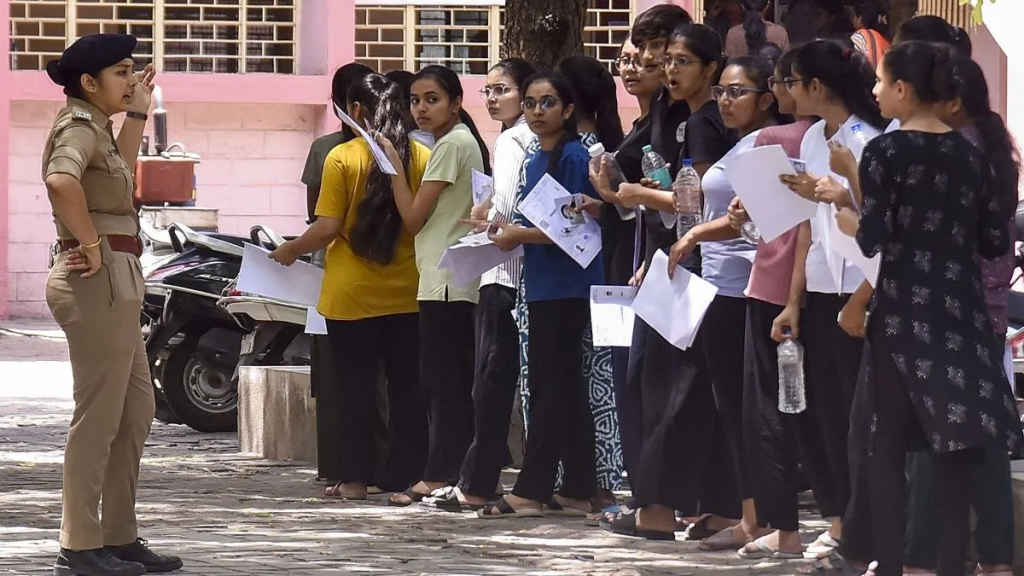
NEET UG 2026 was reconducted on June 21, 2026, in pen-and-paper (OMR) mode, with revised shift timings and enhanced security measures reportedly including GPS-tracked vehicles, AI-based CCTV monitoring, biometric verification, and signal jammers at centres. No fresh registration or additional fee was required from candidates who had already registered for the cancelled May 3 exam. In the lead-up to the re-exam, fresh unverified claims of a second leak surfaced on Telegram, which NTA said it was escalating to cyber-crime authorities for verification – though no confirmed leak of the June 21 paper was established.
What’s on the Agenda Today
According to sources cited in recent reports, the Parliamentary Standing Committee’s July 1 meeting will cover:
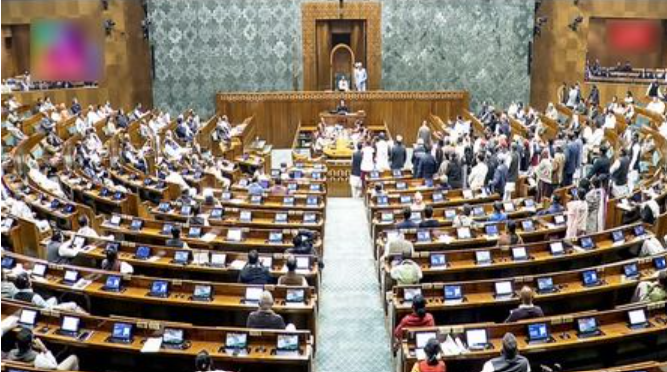
- A review of the June 21 re-examination, with NTA Director General Abhishek Singh briefing the panel on the outcomes and learnings from the re-conducted exam.
- An update on NTA reform measures, presented by Higher Education Secretary Vineet Joshi, covering steps being taken to strengthen the agency’s systems and prevent a repeat of the paper leak.
- Progress on NTA restructuring, presented by former ISRO Chairman K. Radhakrishnan, who chairs the high-powered steering committee set up by the government specifically to monitor implementation of reforms recommended for the NTA.
- A separate briefing on artificial intelligence in education, where former NIEPA head Arun C. Mehta and former IIT Guwahati Director and ex-AICTE Chairman T.G. Sitharam are expected to speak on AI’s impact on education and strategies to improve student employability. Officials from the Indian Institute of Science, AICTE, and the Delhi School of Artificial Intelligence are also expected to contribute to this part of the discussion.
A New Chair for the Committee
This is the first meeting of the Parliamentary Standing Committee on Education, Women, Children, Youth and Sports under its new chairman, Congress MP Mukul Wasnik. The committee was previously chaired by Congress leader Digvijaya Singh, who retired from his position on June 21, 2026 – coincidentally the same day as the NEET re-exam. Under its previous leadership, the committee had already summoned top officials from the Ministries of Higher Education and Health, along with representatives of the NTA and the National Medical Commission (NMC), specifically over the NEET UG paper leak case and separately over CBSE’s onscreen marking system.
Why This Session Is Being Closely Watched
For the lakhs of NEET UG aspirants who lived through the disruption of a cancelled exam and a hastily reorganised re-test, this parliamentary review represents one of the first formal, institutional accountabilities checks on how the entire episode was handled. Unlike a routine post-exam briefing, this session brings together:
- The agency that conducted the exam (NTA)
- The ministry overseeing higher education policy
- An independent steering committee specifically tasked with reforming the NTA
The presence of all three at a single sitting signal that the government is treating this not just as a one-off crisis to be managed, but as a systemic issue requiring structural fixes – particularly given that NEET UG has faced retest situations in two of its last three exam cycles.
What Happens Next
The committee’s review is not expected to result in an immediate public announcement on the same day. Typically, such Parliamentary Standing Committee sessions are followed by a formal report tabled in Parliament, which can include specific recommendations on NTA governance, examination security protocols, and accountability measures. Students and stakeholders should watch for:
- A possible follow-up statement or press briefing summarising the panel’s initial observations
- Updates on the CBI probe, which remains active independent of this parliamentary review
- Any announced changes to NTA’s exam-conduct protocols ahead of future national-level entrance exams
Frequently Asked Questions
Q: Is this the same as the CBI investigation into the NEET paper leak?
A: No – this is a separate parliamentary review process. The CBI probe is a criminal investigation into the leak itself, while the Parliamentary Standing Committee’s review focuses on institutional accountability, the conduct of the re-exam, and systemic NTA reforms.
Q: Will this affect NEET UG 2026 results or admissions?
A: Not directly. This is a review and oversight process; it is not expected to alter results already declared from the June 21 re-exam or the ongoing admission process based on it.
Q: Who is NTA Director General Abhishek Singh?
A: He is the current Director General of the National Testing Agency and is briefing the committee directly on the outcomes and learnings from the June 21 re-examination.
Q: What is the “high-powered steering committee” mentioned in the reports?
A: It’s a government-constituted committee, chaired by former ISRO Chairman K. Radhakrishnan, specifically tasked with monitoring the implementation of reforms recommended to strengthen the NTA.
Q: Has the committee reviewed NEET-related issues before?
A: Yes – under its previous chairmanship, the committee had already summoned top officials from the Ministries of Higher Education and Health, along with NTA and NMC representatives, over both the NEET UG paper leak and CBSE’s onscreen marking system.
Q: Where can I follow updates from this meeting?
A: Since Parliamentary Standing Committee proceedings aren’t typically livestreamed publicly, updates usually emerge through official government communications and subsequent media reporting once the session concludes.
Institutional accountability moments like this one matter, especially for the lakhs of students and families whose futures were disrupted by the NEET UG paper leak and its aftermath. Staying informed isn’t optional in situations like these – it’s essential. That’s why Manabadi remains committed to tracking every development in the NEET UG 2026 story, from CBI probe updates to NTA reform announcements to whatever comes out of today’s parliamentary review, so students never have to piece together the full picture from scattered sources. Keep following Manabadi for the most reliable, up-to-date coverage on NEET UG 2026 and every other exam story that matters to you.