TS SCERT 8th English Textbook 2026 is an essential academic resource for Class 8 students studying under the Telangana State syllabus. Designed as per the latest curriculum prescribed by the Telangana State Council of Educational Research and Training (TS SCERT), this textbook focuses on strengthening English language skills, improving comprehension, and building confidence in communication.
Students, teachers, and parents are increasingly looking for TS SCERT Class 8 English Textbook PDF downloads in both Telugu Medium and English Medium, especially for digital learning and exam preparation. In this article, you’ll find complete details about the textbook, syllabus highlights, benefits, and step-by-step guidance to download the official PDF from manabadi.co.in.
Download TS SCERT 8th English Textbook 2026 PDF
Subject Name
Download Link
AP 8th Class English
click here to download
TS SCERT 8th English Syllabus Overview 2026
The syllabus is divided into multiple thematic units that include prose lessons, poems, and supplementary reading sections. Each unit is designed to enhance language proficiency while conveying moral and social values.
Key Components:
Prose lessons with real-life themes
Poems to improve rhythm, pronunciation, and appreciation of literature
Grammar exercises integrated within lessons
Writing tasks such as letters, essays, and short stories
Vocabulary building activities
The syllabus encourages students to think independently, express opinions clearly, and apply English in daily life.
Benefits of Using TS SCERT 8th English Textbook PDF
Downloading the TS SCERT 8th English Textbook 2026 PDF offers several advantages:
Free Access – No cost involved for students
Easy Availability – Download anytime, anywhere
Mobile & Laptop Friendly – Study on digital devices
Exam-Oriented Content – Based strictly on the latest syllabus
Useful for Teachers – Helpful for lesson planning and assignments
PDF textbooks are especially beneficial for revision, last-minute exam preparation, and online classes.
How to Download TS SCERT 8th English Textbook 2026 PDF from manabadi.co.in
Students can easily download the textbook by following these simple steps:
Visit the official website manabadi.co.in
Navigate to the TS SCERT Textbooks section
Select Class 8 from the list of classes
Choose English Subject
Select the required medium (Telugu / English)
Click on the PDF Download link
Save the file for offline use
The PDFs provided are user-friendly, clear, and suitable for printing if required.
Exam Preparation Tips Using TS SCERT English Textbook
To score well in English examinations, students should:
Read each lesson thoroughly and understand the theme
Practice grammar exercises regularly
Learn new vocabulary and use it in sentences
Write answers in their own words instead of memorizing
Revise poems and prose summaries before exams
Using the official TS SCERT textbook ensures that students stay aligned with the question paper pattern.
TS SCERT 8th English Textbook 2026 is a comprehensive learning resource that supports students in mastering English effectively. With well-structured lessons, engaging content, and exam-oriented exercises, it plays a vital role in academic success. Downloading the Telugu & English Medium PDF from manabadi.co.in makes learning accessible, flexible, and convenient for everyone.
Students are strongly advised to rely on the official TS SCERT textbook to stay updated with the latest syllabus and achieve better results in Class 8 English examinations.
Paragraph Answer Questions (Section – A, Q.No. 5, Marks : 4)
Question 1.
Describe the role of the American naturalist in the short story, “The Dinner Party”.?
Answer:
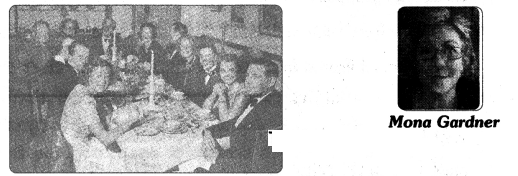
Mona Gardner’s short story “The Dinner Party” offers us an interesting reading. It highlights women’s nerve control. The American naturalist is a special guest at the dinner party. All others are government officials or military personnel. Others are involved in a discussion. He alone stays silent and observes others keenly. He notices strange changes in the features on the face of the hostess. He watches a servant placing a bowl of milk in the veranda. He understands there is a snake. He thinks fast. He plans a strategy. It works out. He manages to make all the guests stay cool and calm till the snake creeps out. When the host appreciates his nerve control, he proves that it is the hostess who has real nerve control.
Question 2.
Describe the scene of the dinner party..?
Answer:
“The Dinner Party”, by Mona Gardner, is a gripping narration of an interesting incident. A colonial officer and his wife host a large dinner party. It is in their spacious dining hall. The hall has a bare marble floor. The rafters are open and glass doors are wide. Government, army and embassy officials with their wives are the guests.
A visiting American naturalist is the special invitee there. Twenty guests take part in that party. There is a spirited discussion about the nerve contral a woman has. A snake is there. The American naturalist takes control of the situation. He succeeds in making everyone stay calm till the snake crawls out.
Question 3.
“A spirited discussion springs up between a young girl and a colonel”. Discuss?
Answer:
“The Dinner Party”, by Mona Gardner, showcases the emotional strength of women. Deeds, not empty words, prove this point beyond anyone’s doubt. A colonial officer hosts the dinner party. The guests are just twenty. During the party, an animated discussion arises between a young girl and a colonel.
The girl says women have advanced a lot from their earlier era of screaming at the sight of a mouse. The colonel contradicts her stand. He asserts men have an extra ounce of nerve control in a crisis. And he adds that ounce counts a lot. But the girl is right. The story proves at the end how strong a woman is in crises!
The Dinner Party Summary in English
Mona Gardner is an American author. She had her story The Dinner Party published in The Saturday Review of Literature in 1941. Her story is a gripping narration with a stuning end. The story takes places in India during the British colonial time. In the story a colonel and a girl argue about how women act in a crisis.
In India, a colonial officer and his wife host a dinner party and invite army officers and government officials along with their wives and an American naturalist. A spirited discussion sparks up between a young girl and the colonel in which the girl believes that women have out grown the fright-from-seeing-a mouse era.
But the colonel denies that and says that men have more control than women in every situation. However, the hostess of the party proves him wrong there is a cobra in the room and the hostess stops it. The hostess decides to solve the problem and advises a plan to get rid of it. She gestures for a bowl of milk to the put outside the door.
An American naturalist at the party is watching the argument and observes the hostess. He understands that there is a cobra in the room, so to calm down everyone he plays a game of control where they cannot move or they would lose money. He told them that he would count three hundred that was five minutes and not one of them is to move a muscle.
Those who move will forfeit fifty rupees. When restarts counting down the last twenty seconds to finish the game. The cobra emerges from under the table and goes towards the bowl of milk outside. He locks it out of the room. The colonel appreciates the American who has just shown them an example of perfect control.
The American asks the hostess, Mrs. Wynnes, how she knew that the cobra was in the room and she replies; “Because it was crawling across her foot.” The colonel is proved wrong by Mrs. Wynnes’s action. The American naturalist was used to show gender does not support your self control.
The writer uses Mrs. Wynnes to prover her them that gender doesn’t support your self control. Throughout the story, Mrs. Wynnes displays perfect self control, proving that women can act bravely in a crisis. Ever though a snake crawled over her foot, she still kept calm. Thus, it justifies that gender does not support.
Meanings and Explanations
colonial (n/adj) /kələʊniǝl/ (కలఉనిఅల్) (polysyllabic-4 syllables) = pertaining to a colony : పాలిత దేశానికి సంబంధించిన, औपनिवेशक
attaches (n-pl) /ǝtætseiz/ (అత్యచెఇజ్) (trisyllabic) = persons who work in embassies : రాయబార కార్యాలయంలో పనిచేయు అధికారులు, अधिकारी, अफसर
naturalist (n) /nætsurəlist/(న్యాచురలిస్ట్) (polysyllabic-4) = biologist : జీవశాస్త్రవేత్త, जीव विज्ञानी
spacious (adj) /sperfǝs/ (స్పెఇషస్) (disyllabic) = vast; huge, big : విశాల, विस्तृत
bare (adj) /beǝ(r)/ (బెఅ(ర్)) (monosyllabic) = uncovered; minimal : ఆచ్ఛాదన లేని; కనీస అవసరాల స్థాయిలో ఉన్న, अभाव में
rafters (n-pl) /ra:ftǝ(r)z/ (రాఫ్ ట(ర్)జ్) (disyllabic) = wooden, sloped beams that support the roof : వాసాలు; కప్పును నిలిపి ఉంచే దూలాలు
jumping-on-a-chair-at-the-sight-of-a-mouse = 10 పదాలకు హైషన్ లతో బంధించి ఒక్క adjective గా సృష్టించి ఉపయోగించిన రచయిత్రి సృజనాత్మకత; ఎలుకను చూడగానే కుర్చీ మీదికి గెంతే
era (n) /ǝrǝ/ (ఇఅర) (disyllabic) = a particular period of time: కాలము ; యుగము
colonel (n) /kз:nǝl/ (కనల్) (disyllabic) = an army officer : ఒక సైనికాధికారి
scream (v) /skri:m/ (స్క్రీమ్) (monosyllabic) = cry out in a shrill voice : కీచుగొంతుకతో అరచు; ఆకస్మికంగా గావుకేకపెట్టు
Paragraph Answer Questions (Section – A, Q.No. 5, Marks : 4)
Question 1.
Is the title, SANGHALA PANTHULU apt to the story ? Explain?
Answer:
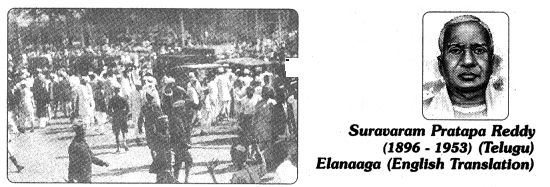
Suravaram Pratapa Reddy’s thought provoking Telugu story, SANGHALA PANTHULU is a social and historical narration. It was rendered into English by Elanaaga (Dr. N. Surendra). The story pictures the struggles and sufferings of innocent and ignorant villagers. Ramasagaram village is just a representative of any village in Nizam’s rule. Timidity and lack of unity and awareness among the masses helped a handful of people to exploit the poor. A well-informed and good-intentioned gentleman (Panthulu) came to their rescue. He explained to the villagers about their rights. He helped them pick up courage and form into associations (SANGHALU). That ultimately solved their problems. Hence, the title perfectly suits the story.
Question 2.
“With all these atrocities, we cannot live”, cries a woman of Ramasagaram. Explain the atrocities the villagers were subjected to?
Answer:
“Sanghala Panthulu”, an insightful Telugu story by Suravaram Pratapa Reddy, portrays the plight of the innocent poor. English rendering of the story by Elanaaga (Dr. N. Surendra) captures its spirit well. The story lists the atrocities Ramasagaram villagers were subjected to by the police. They (atrocities) were innumerable and unjust.
They (villagers) were forced to supply to the police fowls, eggs, groceries, todday and nuts and fruits. The police demanded drudgery. The poor had to clean their toilets, press their legs, get for them firewood, etc. The wages the poor got for their services or supplies were beatings and scoldings. They were branded on the cheeks. An old, tired and hungry woman was beaten to death. The list is Pendless.
Question 3.
They realized that the lack of unity had been the cause for their plight. What followed this realisation? How did it help the people of Ramasagaram? * (Imp) (Model Paper)?
Answer:
“Sanghala Panthulu”, a social story by Suravaram Pratapa Reddy, presents us valuable life lessons. Its English translation by Elanaaga (Dr. N. Surendra) impresses the readers. The story describes the problems the villagers faced. Then it analyses the reasons. And finally it offers a practicable solution.
So, the crisis was resolved. The police were the exploiters. Ramasagaram villagers were the victims. The causes were the lack of unity among them, their timidity, ignorance, etc. With the help of Sanghala Panthulu, the villagers understood the problem. They stood united. They formed themselves into associations. They proved their strength and courage. Their problems ended. Joy pervaded the village. Celebrations started.
Question 4.
Describe the result of the declaration by the “Mohathemeem”.?
Answer:
Suravaram’s social story, “Sanghala Panthulu”, presents the pathetic plight of Ramasagaram villagers. Elanaaga translated this moving Telugu story into English. The police went on exploiting the innocent villagers ruthlessly. Sandhala Panthulu came to the rescue of the poor. The police were angry with Panthulu.
When they tried to arrest Panthulu, a good number of youth revolted against the police. The police complained against them. The Mohathemeem came to enquire into the incident. He found the police were guilty. He declared the dismissal, suspension and scaling down of different police personnel. The villagers felt happy. Their joy knew no bounds. Feasts followed. Justice prevailed.
Sanghala Panthulu Summary in English
Suravaram Pratapa Reddy is multifaceted personality. His writings mainly reflect local history and local people’s sufferings. The story Sanghala Panthulu crafted by Suravaram Pratapa Reddy is a caustic comment on contemporary complex problems. It is translated into English by Elanaaga (Dr. N. Surendra). Like other works of Suravaram, this story also reflects local history and local masses struggles and suffering. Gripping narration moves readers into those periods and places. It offers interesting insights into the then social, economic, political and cultural conditions.
The story takes place in a tiny river side village known as Ramasagaram, ruled by the Nizams. The village Ramasagaram is just a symbol. The time of the story is pre-1940. Most of the villagers are either illiterate or not well-informed. Atrocities witnessed in that village are common all over the Nizam’s state.
It is because people are timid and unorganized. Lack of unity among people, their ignorance about their rights comes in handy to the exploiters. The police are exploiting them to the core. In fact, the village needs no police station. Their only duty is to demand. drudgery, fowls and required grocery without any payment.
They have madigas for drudgery and komatis for supplying commodities. Thus, things are moving happily. But the farmers are perturbed. They observe the lives of people on the other side of the river Krishna ruled by the British. They find that the people are happy there.
Paragraph Answer Questions (Section – A, Q.No. 5, Marks : 4)
Question 1.
Is the title, “The Short-sighted Brothers” apt to the story ? Explain?
Answer:
Yes. The name “The Short-sighted Brothers” and the content of the story look like made-for- each-other things. The title matches perfectly well with the theme. Three brothers are the lead characters. All the three brothers were very short-sighted. It was a physical disability. And they all suffered from the related mental disability too. They failed to see the possible result of their crooked,plans. They were selfish. They were greedy. They tried to cheat one another. Finally their follies were exposed. As the entire story deals with their physical and mental short- sightedness, the title is appropriate to this ancient chinese folk tale.
Question 2.
How did the three brothers try to outsmart one another ?
Answer:
“The Short-sighted Brothers” is a famous Chiness folk story. It exposes the folly of the three brothers. All the three brothers were very short-sighted. Even their personality suffered from the same flaw. They tried to deceive themselves and one another. The youngest brother one day proposed to take charge of their family finances.
He cited his eldest brother’s short- sightedness to support his claim. The second brother too joined the race. The eldest brother proposed a test to prove the power of their sight. They should read the inscription on the newly installed tablet on the door way of the nearest monastery. To outsmart one another, each met the monk secretly and learnt about the writing on it.
Question 3.
Were the three brothers successful in executing their tricks ? Support your answer.?
Answer:
No. The three brothers failed in their efforts. The famous Chinese folk tale “The Short-sighted Brothers”, explains their failure. All the three brothers were very short-sighted. Once, they wanted to prove the power of their sight. They were to read an inscription. Each learnt secretly from the monk about the writing.
They thought they could outsmart the others. They visited the monastery the next day. They started READING from the TABLET. Each one READ out. Then the monk came out. He told them that the TABLET was not yet put up! They READ from the TABLET that WAS NOT there! Their folly was exposed. They realised it!
Question 4.
Does the story “The Short-sighted Brothers’ support the wise saying, ‘Honesty is the best policy’ ? Discuss. * (Imp) (Model Paper)?
Answer:
Yes. Honesty is undoubtedly the best policy. It is certainly very difficult to practise the policy. The story, The Short-sighted Brothers’ proves both these points clearly. All the three brothers were short-sighted. They were selfish. They had no ethical values. They thought they could easily cheat others.
They got by heart the inscription ‘Be Honest At All Times’. But they never understood its meaning or its importance. They followed dishonest means to prove the power of their sight. Their follies were exposed. Thus, they learnt that their deceptive tricks failed. Only honesty shines forever! And through the brothers, the readers too get a valuable lesson.
The Short-sighted Brothers Summary in English
The folk tale, ‘The Short-sighted Brothers’ makes an interesting reading. With its gripping narration, the story excites the reader thoroughly. In the end takes a sudden twrist, stunning and surprising the reader. Equally shocked were the brothers in the story. It exposes the follies of the brothers, prompting many a reader to introspent.
The three aged brothers were the central characters in the story. They were short sighted, both physically and mentally. They were selfish and greedy. Citing their eldest brother’s short- sightedness as a reason, the youngest brother proposed to manage their family finales. He was blind to his own disability. All of them suffered from the same flow, sight problems and lack of values. Yet, each tried to outmart the other.
Therefore, they planned to test their own vision by reading the inscription above the doorway of nearby monastery. Each knew that he couldn’t read it. So, they secretly and separately enquired with monk there as to what was written on the tablet. And later, they pretended they were reading the inscription with their own eyes. In the process, they fooled themselves they memorised the quotation, “Be honest at all times”. But, they did not adopt it in their own lives! They failed to see the outcome of their evil plans. It was then, that the monk revealed that the tablet was not put up yet. The brothers realized how foolish they were !
Finally, the story clearly shows the physical weakness of the brothers. It also exposes their follies. Hence, we can very strongly say that the title suits the story well. If at once tells us what we are going to find in it.
Meanings and Explanations
short-sighted (adj) /sɔ:(r)t saıtıd/ (షో(ర్)ట్ సైటిడ్) (trisyllabic) = not able to see things etc clearly when they are not very near to that person; హ్రస్వదృష్టి లోపం కల; దగ్గరి వస్తువులను మాత్రమే చూడగల.
folklore (n) /fǝuklɔ:(r)/ (ఫఉక్ లో(ర్)) (disyllabic) a collection of conventional tales passed on to posterity orally : మౌఖికంగా భావితరాలకు అందించబడే సాంప్రదాయ కథలు; జానపద గాథలు
to take charge of (phrasal verb) to be in the control of; to take responsibility of : అదుపులో, అధీనంలో ఉంచుకొను; బాధ్యత వహించు
to take advantage of (phrasal verb) = to make use of a situation for one’s selfish interests: ఒక పరిస్థితిని తమ స్వార్థ ప్రయోజనాలకు వాడుకొను
sneer (v) /sniǝ(r)/ (స్నిఅ(ర్)) (monosyllabic) = speak harshly; say something without respect: కఠినంగా, అవమానకరంగా మాట్లాడు, अवहेलना, तिरस्कार
monastery (n) /monǝstri/ (మొనస్ ట్ రి) (trisyllabic) = a place where sages, ascetics, etc. live: సన్యాసాశ్రమము, मट
tablet (n) /tæblet/ (ట్యాబ్ లెట్ ) (disyllabic) = a slab of stone/clay for carving: రాతి (మట్టి) పలక; pill = మాత్ర; an electronic device = ఒక ఎలక్ట్రానిక్ పరికరము; చిన్న కంప్యూటర్, गोली
inscription (n) /inskripsən/ (ఇన్ స్ క్రిప్ షన్) (trisyllabic) = writing or carving on a stone surface : రాతిపలకపైని రాత
in unison (phrase – functions as an adverbial) = all together and at a time: అందరూ కలిసి ఒకే సమయంలో (చెప్పు)
get a few winks (idiom) = sleep for a little while: కొద్దిసేపు నిద్రించు
sneak (v) /sni:k/(స్నేక్ ) (monosyllabic) = go without anyone’s knowledge: ఎవరికీ తెలియకుండా (రహస్యంగా) వెళ్ళు, जाव
monk (n) /maŋk/ (మంక్ ) (monosyllabic) a member of an all male-member religious group : సన్యాసి; అందరూ మగవారు మాత్రమే ఉండే మత బృంద సభ్యుడు, मट
Confucius (proper noun) /kənfjʊ:səs/ (కన్ ఫ్యూషన్) = a very famous philosopher from ancient China (550-479 B.C) : చైనాకు చెందిన ప్రాచీన కాలపు ప్రఖ్యాత తత్వవేత్త
chuckle (v) /tsakǝl/ (చకల్) (disyllabic) = laugh silently and inwardly : తమలో తాము నిశ్శబ్దాన్గా నవ్వుకొను
triumphantly (adv) /trai^mfǝntli/ (ట్రయ్ అమ్ షన్ ట్ లి) (polysyllabic-4 syllables) over the success : విజయ గర్వంతో, ఆనందంగా
Paragraph Answer Questions (Section – A, Q.No. 5, Marks: 4)
Question 1.
The young man feels that the five boons are not gifts, but merely lendings. Justify his opinion with reference to his experiences?
Answer:
Mark Twain is the pen name of Samuel Langhorne Clemens. The world celebrates him as an eminent humourist and a great writer. The present story, “The Five Boons of Life” present his pessimistic view of life. In the story, a fairy offers a young man a boon.
The fairy asks him to choose from “Fame, Love, Riches, Pleasures and Death”. She warns him that only one of those five boons is really precious. The youth chooses ‘pleasures’ first. He very soon realises that each pleasure is followed by pain. Next he chooses ‘Love’ that ends him in grief. ‘Fame’ leads him into ‘envy and pity’. ‘Wealth’ throws him into poverty. So, he rightly feels that they are not boons but mere lendings.
Question 2.
Every time the youth chooses a gift, the fairy expresses her dissatisfaction with her gestures. Comment?
Answer:
Mark Twain’s story, “The Five Boons of Life” offers us a valuable lesson. It highlights the need to choose right. The fairy in the story advises the youth to select a boon. She tells him that of the five boons “Fame, Love, Riches, Pleasures and Death” only one is precious.
But, each time the youth makes a wrong choice. The fairy expresses her displeasure. Once, her eyes are filled with tears. Yet again, she sighs deeply. At another time, she asks him to use his wisdom. But the youth repeats the same mistake. The fairy here represents an opportunity. Opportunities knock our doors often. It is our responsibility to use that chance aptly. Here, the youth’s failure presents a lesson to us.
Question 3.
“The years have taught you wisdom . surely it must be so”, remarked the fairy. Is she right ? Explain?
Answer:
The short story “The Five Boons of Life” is a bundle of boons in learning. Mark Twain shows us how difficult it is to select from among options. The story also exposes the deceptive nature of appearances. The fairy presents to the youth her five boons. They are : “Fame, Love, Riches, Pleasures and Death”.
She asks him to be careful in his selection. She adds that only one of them is valuable. The youth falters and chooses ‘Pleasures’. He regrets his choice. Then he opts for ‘Love’. He feels sad about his wrong decision. Then, the fairy says that years must have taught him wisdom. Yes, experience is the best teacher. But the youth stays a bad learner. So, he hasn’t picked up any wisdom.
Question 4.
What are the thoughts in the mind of the youth when he chooses wealth? What is the result ?
Answer:
“The Five Boons of Life”, by Mark Twain, presents a philosophical approach to life. It shows us how foolish we are in our priorities at times. The youth stands for man’s follies. He gets a chance, from a fairy to choose from ‘Fame, Love, Riches, Pleasures and Death’. He is led by false appearances.
The fairy’s warning fails to correct him. He chooses ‘Pleasures’ first. He soon realises how painful those pleasures are! He than opts for ‘Love’. He understands how grief follows love. Then, he goes for Fame. Again, it proves to be a wrong choice. Then he thinks ‘Wealth’ will make him happy. He plans to spend, shine, and feed his hungry heart with his mockers envy. He thinks he can buy everything the earth can offer. He is wrong, once again.
The Five Booms of Life Summary in English
Samuel Langhorne Clemens is popularly known by his pen name Mark Twain. He was an American writer, humonist and lecturer. He is rightly called the father of American literature. His short story ‘The Five Boons of Life’ is a parable with his characteristic twist at the end.
The theme of the story is the deceiving nature of human life. This is enhanced through the motifs of Fame, Love, Riches, Pleasure and Death. These five metaphorical gifts are actualley five human experiences which are more or less universal. The story conveys the pessimistic message of the writer that there is nothing pure in life. Every good thing one experiences is showed its reverse. According to him, Death is the only eternal truth which becomes a gift when one transcends the fear of death.
In the story a fairy comes to a youth and grants him permission to choose one of her five gifts. Pleasure, Love, Fame, Wealth and Death. The fairy also warns him that only one of these gifts is truly valuable. So, he should choose wisely. First, he chooses pleasure. But soon he comes to realize this gift is transcient and often followed by pain. Afterwords, he chooses love.
But when the fairy returns he is about to bury a loved one and has corne to realize that love also brings grief with it. His third choice is fame. Yet once gain is disappointed. He only gets to enjoy fame for a brief time, before he becomes the target of enjoy and calumny. On having chosen wealth later to deride his detractors, he becomes a pauper Finally, he seeks for death realizing that he has nothing in life to love for. But the fairy has already given her gift of death to a child leaving the man in a miserable state. Thus the man endsup seeing what he thought are great gifts are actually mere lendings.
The fairy offers many warnings to the man about choosing wisely and has the expressions of disapproval when the man chooses incorrectly. But he focuses on himself and not on the advice from the gift giver. Selfishness, desire to get ahead be the best, have the best are still issues facing man even today.
Meanings and Explanations
fairy (n) / feari / (ఫెఅరి ) (disyllabic ) = a creature with magic powers: మంత్రశక్తులు కల ఒక, परी
Paragraph Answer Questions (Section – A, Q.No. 5, Marks : 4)
Question 1.
Write a paragraph on how Alan and his parents felt excited when he was chosen to play for the school cricket match. *(Imp) (Model Paper)?
Answer:
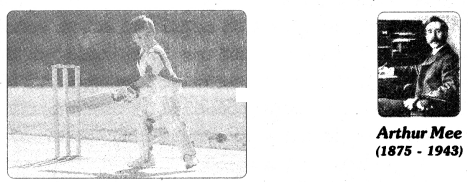
Arthur Henry Mee is famous as an eminent educator and journalist. His short story “Playing the Game” is at once didactic and entertaining. Its gripping narration offers a pleasant reading experience. Alan is the lead character. He was a schoolboy. He loved cricket. His parents supported and encouraged him.
Alan’s father actually helped Alan practise bowling. He commented that Alan was shaping as a good bowler. Then, Alan was selected to play in his school team. That was a well deserved opportunity. Hence Alan felt excited. That made Alan’s parents doubly excited. That is just natural and justifiable on their part.
Question 2.
Narrate the feelings of Alan as he was not able to reach the ground in time after meeting the old man on his way?
Answer:
“Playing the Game”, from the pen of Arthur Mee, pictures the humane angle of Alan. Alan was studying in a school. He got his long-awaited chance to play cricket in his school team. He was excited. On that important day, he started early. But on his way, he saw an old, lean and weak man. That old man was walking with difficulty.
The man in Alan woke up. He helped the old man walk with his support. So, he couldn’t reach the ground in time. His chance to play was given to another boy. Alan felt bad. He bit his lips. His sorrow knew no bounds. He couldn’t even express his inability to go there in time. He walked back home slowly in disappointment.
Question 3.
Helping the old is as good ass playing the game.. Elucidate with reference to the story “Playing the Gamel..?
Answer:
Arthur Mee is known for his humanism. He expresses it artistically. “Playing the Game” exhibits that rare quality. Alan is the central character. He loved cricket. Once, he got a chance to represent his school in cricket. On the scheduled day, Alan started for the ground early. But on the way, he noticed an old man struggling to walk. He was move.
He held his helping hand to that aged man. Hence, he couldn’t reach the ground in time. He missed the much-awaited opportunity. He felt sad. But for this kind act, his parents presented him with his favourite bicycle. His classmates cheered him. The story proves, thus, that helping the old is better than playing the garmel.
Playing the Game Summary in English
Arthur Mee is an English writer, journalist and educator. His main contribution in the field of writing is towards the younger generation. No doubt that he is a moralist and humanist. Some of his writings are based on conversational style. As far as his style in writing is concerned it is worth easy, lucid and provides entertainment to the readers. The present article, ‘Playing the Game’ is written by him for I.P.C magazines, London. It is about a school boy, Alan.
Alan was chosen to play in the school cricket match. He was proud of it. He had practised bowling with his father for weeks. He was a good bowler. He had to play in his school team. His father promised him a bicycle, if his team won the match. When Alan was going to the play ground, he saw an old man on the way. He was leaning heavily on his stick. He was weak and lean. The road was so hilly and the wond was too much for him. He could not walk easily on the way. So, he requested Alan to help him. He wanted to help him.
He supported the old man by his arm. But the old man stumbled over a loose stone. Alan kept standing by him. He waited for someone who might help the old man. At last a policeman came there and promised, Alan to help him. He relieved Alan. The police man finally took him home. Now Alan ran as he could but all was in vain.
When Alan reached the playground, he found young Herold Banks playing in his place. The police man told Alan’s father what had happened. He bought a bicycle from the market for Alan. Although he could not play on the cricket pitch, he was playing the game of helping an old man. On the next morning the school boys gave Alan three loud cheers as they had known about his kind out.
Meanings and Explanations
playing the game (phrase): doing the right thing at the right time, సరియైన సమయంలో సరియైన పనిచేయుట
see (n-pl) (someone) off (phrase) : send off, say goodbye, farewell, వీడ్కోలు పలుకు, देखना
meadow(n) / medǝʊ / (మెడ ఉ) (disyllabic): a field covered in grass, పచ్చిక బయలు, चारागाह
Alan bit his lip: Alan expressed his disappointment and helplessness by pressing his teeth against his lips, పెదవులను కొరుక్కొంటూ ఆలన్ తన నిరుత్సాహాన్ని, నిస్సహాయతను వ్యక్తీకరించెను.
It is not the case only with the coals, Mrs. Bouncer, but I’ve lately observed a gradual and steady increase of evaporation among my candles, wood, sugar, and matches?
Answer:
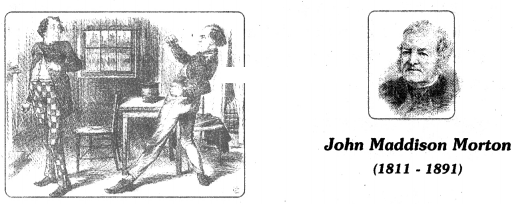
Introduction: We come across these interesting words in Box and Cox, a one-act play written by John Maddison Morton.
Context & Explanation : Mrs. Bouncer a greedy landlady, rents out her room to two persons at the sametime, without letting one know of the other person. They are Mr. Box, the printer and the other man, Mr. Cox. Mr. Box works all night and lives here only during the day. Mr. Cox is employed in a hat shop where he spends all day.
Thus, Mrs. Bouncer manages to ensure that they do not meet each other in the room. But, they suspect something is wrong there. They notice their things being used up by others. The given words from Cox complain about this loss of things. It speaks alot about Cox’s nature.
Critical Comment : Here, Mr. Cox addresses these words to Mrs. Bouncer.
Question 2.
It was a capital idea of mine-that it was?
Answer:
Introduction: This line is taken from the one-act play, Box and Cox written by John Maddison Morton. This play is regarded as the best farce of the nineteenth century.
Context & Explanation: Mrs. Bouncer is by nature covetous lady. It is this trait of personality that makes her let out a single room to two different persons simultaneously, taking unadvantage of their different professions and callings. By this, she is able to earn double income from the same room. She takes the opportunity thinking it as a capital idea. Practically, nobody can imagine such a thing. As soon as Cox leaves the room, she gets busy in the room to put his things out of Mr. Box’s way.
Critical Comment: Here, Mrs Bouncer feels proud of herself to have got an idea to rent out the room to two different people at the same time.
Question 3.
It’s quite extraordinary the trouble I always have to get rid of that venerable female?
Answer:
Introduction: This line is taken from the one-act play, Box and Cox written by John Maddison Morton. This play is regarded as the best farce of the nineteenth century.
Context & Explanation : Mrs. Bouncer is a greedy landlady. She lets out her lodge room to two persons separately. She manages to keep it unknown to both of them. The drama emanates from this fact. Mrs. Bouncer meets both Mr. Box and Mr. Cox almost every day. She cautiously guards her secret plan. But Mr. Box finds is very difficult to put up with this woman. He works all night very hard. He comes to the room in the morning very tired. He longs to rest at once. But, to get rid of this woman turns out to be difficult.
Critical Comment: Mr. Box expresses his problem here in his strange style.
Question 4.
“Cox, I shan’t want you today – you can have a holiday.” (Imp, Model Paper)?
Answer:
Introduction: This line is taken from the one-act play, Box and Cox written by John Maddison Morton. This play is regarded as the best farce of the nineteenth century.
Context & Explanation : Mr. Cox says these words. He reports the words of his master. That day, the owner permits Cox a holiday. So, Cox returns to his room. This is unusual for him. But, this fact gives a twist to the play. For the first time, Mr. Cox and Mr. Box meet each other in the room. Each finds fault with the other initially.
Critical Comment : Mrs. Bouncer’s folly is exposed. Thus the words play a crucial role.
Paragraph Answer Questions (Section – A, Q.No. 4, Marks : 4)
Question 1.
Box and Cox is regarded as the best farce of the 19th century. Support the statement with illustrations from the play?
Answer:
Box and Cox, crafted by John Maddison Morton is a one act play. It is hilarious. It drives readers into one continuous rear of laughter. A farce is a play with a style of humour marked by improbabilities. The play Box and Cox is remarkable for its stark improbabilities. Mrs. Bouncer, the greedy landlady, renting out the same room to two gentlemen separately is the most unimaginable improbability.
The tenants, Mr. Box and Mr. Cox, do not know this. Mr. Box, a printer stays in the room only during the day. Mr. Cox, a hatter, occupies the room only at nights. Mrs. Bouncer somehow manages to ensure that they do not meet each other in the room. Yet, they suspect that something is wrong. Her explanations to their complaints add to the fun. The language Mr. Box and Mr. Cox use is so verbose that it evokes lots of laughter. Thus, the play proves itself to be a farce of rare quality.
Question 2.
Sketch in a paragraph, the character of Mrs. Bouncer?
Answer:
John Maddison is an English playwright. His Box and Cox is a one-act farce. It has just three characters. One of them is Mrs. Bouncer. She is a greedy landlady. She rents out the same room to two persons at the same time, with letting one know of the other person. They are Mr. Box and Mr. Cox. Mr. Box, a printer stays in the room only during the day. Mr. Cox, a hatter occupies the room only at nights.
She somehow manages to see that they do not come “to the room at the same time. She boasts of her clever idea. Practically nobody can imagine such a thing. However, she can swallow, and digest any and every amount of insult and disrespect. She is accused of stealing by both her tenants. But she turns a ear to their remarks merely to ensure receiving double rent for a single room. She presents a typical example of a farcical caricature with unparliamentary and uncivil language. Her treachery is finally found out and she is put to shame. She bursts into sobs and prays for pardon.
Question 3.
” ………………….. So that I’m getting double rent for my room, and neither of my lodgers is any the wiser for it” says Mrs. Bouncer. Is she right in her estimate of her lodgers? Support your answer with details?
Answer:
John Maddison is an English playwright. His play Box and Cox is a one-act farce. It is hilarious. It has just three characters. Mrs. Bouncer is a greedy landlady. She rents out her room to two persons at the same time. The tenants, Box and Cox do not know it. It shows her greediness.
She boasts of her capital idea. She feels that neither of her lodgers finds it. Even though she feels like that she is always in tremble of fear. Initially, she may succeed in deceiving them for a while we can observe it when she gives various excuses when they suspect something is wrong. In order to escape from their doubts, she gets busy to put things out of their notice. That is why they fail to know her deceptive nature. Later, they come to know her deceitful dealings. Thus, her estimate of her lodgers is not completely right.
Question 4.
Box and Cox fulfills all the characteristics of a one act play. Explain. (Imp, Model Paper)?
Answer:
Box and Cox by John Maddison Morton is a comic one-act play. It is regarded as the best farce of the 19th century. It was translated into many European languages. It is a humorous drama. It is short. It fulfills all the characteristics of a true one-act play. It has just three characters. It follows the unity of place.
That is the action takes place in one location. It observes the unity of time too. Its action does not last for a long. It has humour in abundance. It also serves a social purpose by exposing certain follies we suffer from. The play, Box and Cox, thus proves itself to be a perfect comic one-act play. It has all the characteristics of a one- act play.
Box and Cox (One-act Play) Summary in English
Box and Cox is a one-act farce by John Maddison Morton. It is based on a French one-act Vandeville Frisette. It is a humorous drama. It fulfills all the characteristics of a true one-act play. It has just three characters. It follows the unity of place and time too. It has humour in abundance. It serves a social message.
Mrs. Bouncer is a greedy landlady. She rents out her lodge room to two persons at the same time without their knowledge. The gentlemen pay weekly rent to Mrs. Bouncer. One of them, Mr. Box, a printer, works at night and stay at this room only during the day time. The other man, Mr Cox, a hatter, works at the shop all through the day and occupies the room at night. Mrs. Bouncer somehow manages to see that they do not come to know this. Mrs. Bouncer feels that it is her capital idea. Practically, nobody can imagine such a thing.
After a while, the tenants suspect that something is wrong, then starts a strange series of situations. Cox doubts that Mrs. Bouncer has been using the room during the day time. He complains to her that his coal continues to decrease, and there is a steady increase of evaporation among his candles, wood, sugar, and matches.
He also complains that his room is full of tobacco smoke. Mrs. Bouncer gives various excuses on this matter including that Box, who she says, occupies the attic, is a persistant smoker and that his smoke must come down the chimney. Cox leaves for his work at the hat shop, and on the stairs passes Box, who returns from the night shift at the newspaper printer. Meanwhile, Mrs. Bouncer gets busy to put Mr. Cox’s things out of Mr. Box.
One day, Mr. Box has brought a rasher of bacon with him. He prepares to cook at once. He lights the fire. He is indignant that his matches have been used and his candles burnt low. For being at home only during the day. He suspects Mrs. Bouncer of these actions. In an unhappy and sleepy state of mind, he places the gridiron on fire and then with fork lays his bacon on the gridiron to cook.
He goes to bed for a nap. In the meantime, Cox returns the room because he gets an unexpected holiday from his employer. He has bought a mutton chop and going to cook it on the gridiron, he finds the fire already lit and the rasher of bacon on the gridiron. He removes it and puts his chop in its place. He hurries into the adjoining room for a plate.
The slamming of the door awakens Box. Remembering his bacon, he leaps out of the bed and finds the chop where he left the rasher. He angrily seizes the chop, flings it out of the window, and leaves the room to pick up a plate. Cox returns, and instead of his chop he discovers the rasher that follows the chop out of the window.
Box and Cox meet, each imagining the other to be an intruder, each pulling the last week rent receipt from his pocket, they find fault with each other. But finally they come to know of Mrs. Bouncer’s deceptive trick. She bursts into sobs and prays for pardon.
Meanings and Explanations
box and cox (phrase) / boks aånd koks / (బోక్స్ యాండ్ కోక్స్) : an arrangement where space or faclities are shared by different persons, ఒక స్థలము లేదా వసతి వేరు వేరు వ్యక్తులు వినియోగించుకోవటం. ఈ నాటిక ప్రసిద్ధిగాంచిన తరువాతనే ఈ ప్రయోగము కూడా వాడుకలోకి వచ్చింది.
waistcoat (n) / weskǝt / (వెస్కట్) (disyllabic) : a sleeveless, collarless garment worn over a shirt, చొక్కాపై ధరించే, చేతులు, కోలర్ లేని కొట్టు, वास्कट
trousers (n-pl) / traʊzə (r)z / (ట్రౌజ(ర్)జ్) (disyllabic): an article of clothing that covers the part of the body between the waist and the ankels, పండ్లము, పొడుగులాగు, మడమల దగ్గర నుండి నడుము వరకు శరీరాన్ని కప్పిఉంచే దుస్తులు, पायजामा
lor (n) / lə:(r)/ (లో(ర్)) (monosyllabic): short form of ‘lord’, a respectable way of addressing a gentleman, “లార్ట్” అనే పదానికి సంక్షిప్త రూపము, మగవారిని ఉద్దేశించి పిలవడానికి గౌరవ సూచక పదము
suspect (v) / sǝspekt /. (సస్పెక్ట్) (disyllabic): have doubts about, అనుమానించు , संदेह करना
grumble (v)/grambl/ (గ్రామ్ బెల్ ) (disyllabic): to complain without a cause, ఆకారణముగా ఫిర్యాదులు చేయు, असंतोष प्रकट करना
chimney (n) / tsimni / (చిమ్మి ) (disyllabic) : a vettical tube used to emit smoke, etc, పొగ గొట్టము, चिमनी
cheeroots (n-pl)/tferu:ts/ (55) (disyllabic) : cigars, చుట్టలు, సిగరెట్ లు
Havanas (n-pl) / həvænəz / (చేరూట్ స్) (trisyllabic): cigars of a famous brand of Cuba, క్యూబాకు చెందిన ప్రఖ్యాత కంపెనీకి చెందిన సిగరెట్లు
attic (n) / ætik / (యాటిక్) (disyllabic): the space directly below the roof in a house, అటక
mantlepiece/mantelpiece (n) / mænt/pi:s / (మ్యాన్ ట్ ల్ పీస్) (trisyllabic): a shelf affixed to – the wall above a fireplace, కుంపటి గోడకు బిగించిన అలమరా
fender (n) / fendə(r) / (ఫెన్ డ(ర్)) (disyllabic) : a low metal framework in front of a fireplace, కుంపటి ముందర ఎత్తు తక్కువలో ఏర్పాటు చేసిన లోహపు తడిక లాంటిది
hob (n) / hob / (హాబ్ ) (monosyllabic): an iron shelf at the side of a fire grate, కుంపటి పక్కన ఏర్పాటు చేసిన ఇనుప అలమరా
TG Inter Text books PDF 2025-26: Telangana Board of Intermediate Education (tgbie) provides a well-structured academic framework aimed at giving students a strong foundation for higher education. One of the most essential academic resources for any student preparing for Intermediate exams is the Telangana Inter Textbooks, which are officially designed and published by the Telangana State Council of Educational Research and Training (TSSCERT). These textbooks are carefully revised each year to align with updated curriculum standards, ensuring that students receive accurate, relevant, and concept-based learning material.
Telangana Inter Text books PDF 2025-26 Download 1st & 2nd Year (All Streams)
This page provides a complete overview of Telangana Inter textbooks for 1st Year and 2nd Year, including book lists, subject-wise details, syllabus coverage, benefits of using official textbooks, and guidance on how students can make the best use of them throughout the academic year.
Telangana Inter Textbooks 2025: Subject-Wise Book Details for All Streams:
Telangana Intermediate textbooks cover a broad range of academic disciplines across two streams:
General Stream: MPC, BIPC, CEC, HEC, MEC
Vocational Courses: Various trade-specific subjects
The textbooks are prescribed based on the latest academic structure announced by TGBIE. They are available in English and Telugu mediums to ensure accessibility for all students across the state. The content in these textbooks is aligned with national education standards and promotes competency-based learning.
Each textbook covers the entire syllabus in a chapter-wise manner, including examples, solved models, exercises, diagrams, and practice questions. These textbooks also form the basis for board exam question papers, making them the most reliable study material for Telangana Intermediate students.
Telangana Intermediate 1st Year Text books PDF (Class 11)
Telangana Inter 1st Year is an important phase where students build foundational concepts for competitive exams and higher education. Here is the list of commonly used 1st Year textbooks:
Telangana Intermediate 2nd Year Text books PDF (Class 12)
The 2nd Year (Class 12) textbooks are more advanced and help students prepare thoroughly for board exams and competitive exams like EAMCET, JEE, NEET, CA Foundation, ICAR, CLAT, and more.
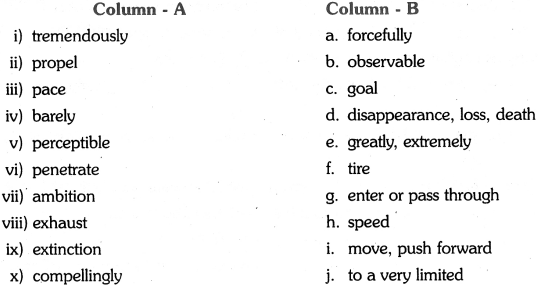
Match the following words in Column A with their meanings in Column B.
Annotations (Section – A, Q.No. 2, Marks : 4)
Question 1.
No one tried to persuade me. The decision was mine alone. * (Imp, Model Paper)?
Answer:
Introduction: This sentence is taken from Roger Bannister’s inspirational essay ‘The First Four Minutes’. It is his personal experience.
Context & Explanation : Bannister was the first man to run the mile in 3 minutes 59.4 seconds. He narrates his eventual victory of the race in the essay. He says that failure is as exciting to watch as success. This is possible only when the player exhibits his sport genuinely. He says that the spectators fail to understand the mental agony that an athelete passes through before he enters the field. He says that there was no force from anyone to make him participate in this race. It was his own decision.
Critical Comment: Here, he narrates his glorious moments and second to second experi- ences while running for the goal.
Question 2.
A voice shouting ‘Relax’ penetrated into me above the noise of the crowd?
Answer:
Introduction: This sentence is taken from Roger Bannister’s inspirational essay ‘The First Four Minutes’. It is his personal experience.
Context & Explanation : Bannister looked at the flag as he lined up for the start. The flag swayed gently. The race started. He understood that he was going very slow. He himself shouted ‘Faster’. His worry increased when he heard the first lap time 57.5 seconds. In that excitement his knowledge of pace had deserted him.
At one and a half laps he was still worrying about the pace. Then a voice shouting “Relax” penetrated into him above the noise of the crowd. He followed it and started relaxing. There was no pain and stress. Later, he came to know that it was his coach ‘Stampfl’s advice.
Critical Comment: Dr. Roger Bannister narrates his glorious moments and second to second experience while running for the goal of one mile race.
Question 3.
The physical overdraft came only from greater will power?
Answer:
Introduction : This sentence is taken from Roger Bannister’s inspirational essay ‘The First Four Minutes’. It is his personal experience.
Context & Explanation : Here, he describes the power of will power. Now, he had turned the last bend. There were only fifty yards more. His body exhausted all its energy. But, it went on running just the same. That energy came from greater will power. At that crucial time, determination, dedication and will-power lead his legs ahead. Thus, with all his energy and will power he could succeed.
Critical Comment: He narrates his glorious moments and second to second experience while running for completing a one mile race.
Question 4.
No words could be invented for such supreme happiness, eclipsing all other feelings?
Answer:
Introduction: This sentence is taken from Roger Bannister’s inspirational essay The First Four Minutes. It is his personal experience.
Context & Explanation: Finally Bannister reached the place where no man had yet ventured. He achieved it in his first attempt of the year. He was the first man to run the race of one mile in 3 minutes 59.4 seconds. He did on May 6th, 1954. Therefore he became free from the burden of athletic ambition. There were no words for describing his happiness. His joy was boundless. It eclipsed all other feelings.
Critical Comment: Here, he describes his elation for his success.
How did Roger Bannister feel in the first lap of the race?
Answer:
Bannister narrates his eventual victory of the race in the essay. During the first lap of the race, Bannister looked at the flag as he lined up for the start. The flag fluttered gently as the sails moved gently in Bernard Shaw’s Saint Joan. He felt complete silence on the ground.
When the gun fired for the second time, Brasher went into the lead and he slipped in behind him. It seemed his legs lost control of himself. He understood that he was going very slow. He himself shouted ‘Faster’. His worry increased when he heard the first lap time 57.5 seconds. In that excitement his knowledge of pace had deserted him. However, he could succeed.
Question 2.
Why did Dr. Bannister feel that the moment of the lifetime had come ?
Answer:
Bannister was the first man to run the race of one mile in 3 minutes 59.4 seconds. In this essay, he narrates his eventual victory of the race. He says that there was no force from anyone to make him participate in this running race. It is entirely his own decision. He passed the half mile in 1 minute 58 seconds.
Later, he had to run the last lap in 59 seconds. He felt a moment of mixed joy and anguish. His mind raced, well ahead of his body. It drew his body compellingly forward them, he felt that the moment of life time had come. There was no worry. He felt confidence in his success. It because there was only 200 yards of track under his feet. He realized that he was going to create a record of life time.
Question 3.
What gave Dr. Bannister strength in the final spurt ?
Answer:
Dr. Roger Bannister was the first man to run the race of one mile in 3 minutes 59.4 seconds. He narrates his eventual victory of race in this essay. In the final spurt, he got the strength from his will power. He had turned the last bend. There was only 50 yards more to be run. His body tired and consumed all his energy. But, it went on running. That strength came from great will power. At that juncture, determination, dedication and strong will power lead him ahead. Therefore, he could succeed with his will power.
Question 4.
Describe the feelings of Bannister after the race was over?
Answer:
Dr. Roger Bannister was the first man to run the race of one mile in 3 minutes 59-4 seconds. He narrates his eventual victory of the race in this essay. Finally, he reached the place where no man had yet ventured. He achieved it in his first attempt of the year. He run the race in 3 minutes 59.4 seconds. He achieved it on May 6th, 1954. After the race was over, he became free from the burden of athletic ambition. There were no words for describing his happiness. His joy was boundless. It eclipsed all other feelings.
Did you participate in any sport and missed a chance to win in a slight time frame
The First Four Minutes Summary in English
Dr. Roger Bannister was the first man to run the race of one mile in 3 minutes 59.4 seconds. The present prose piece, “The First Four Minutes” is a revelation of the stress and strain. Dr. Bannister underwent in achieving this record. He says that failure is as exciting to watch as success. This is possible only when the player exhibits his sport genuinely and completely. Here, he says that there was no force from anyone to make him participate in that four minutes running. The decision was entirely his own.
During the first lap of the race, Bannister looked at the flag as he lined up for the start. The flag swayed gently as the sails moved gently in Bernard Shaw’s Saint Joan. He felt complete silence on the ground. When the gun fired for the second time, Brasher went into the lead and he slipped in behind him.
It seemed his legs lost control of himself. He understood that he was going very slow. He himself shouted ‘Faster’. His worry increased when he heard the first lap time, 57.5 seconds. In that excitement his knowledge of pace had deserted him. At one and a half laps, he was still worrying about the pace. Then, a voice shouting ‘Relax’ penetrated into him. Afterwards, he learnt that it was his coach Stampfl’s voice. He released, there was no strain.
He barely noticed that half mile passed in 1 minute 58 seconds. Chataway went into the lead, at three quarters of a mile the effort was still barely perceptible. The time was 3 minutes 0-7 seconds. He had a moment of mixed joy and anguish, when his mind took over. It raced well ahead of his body.
It drew his body compellingly forward. He felt that the moment of life time had come. The encouragement of the faithful oxford crowd gave him greater strength. There were only 50 yards more. His body exhausted all its energy. But, his will power moved him forward. At this crucial moment, his legs carried him over the last few yards. Here, we can understand the greatness of will power.
The last few seconds seemed never ending. The faint line of the finishing tape stood ahead as a heaven of peace. The arms of the world were waiting to receive him. Then, he leapt at the tape like a man taking his last spring to save himself from the chasm that threatens to engulf him. His effort was over. He collapsed unconscious. It was then that real pain overtook him. The announcement came.
He grabbed Brasher and Chataway and seampered round the track in a burst of spontaneous joy. They had done it in their first attempt of the year. In the wonderful joy he forgot his pain. He felt free of the burden of atheletic ambition, that he had been carrying for years. No words could be invented for his supreme happiness. If eclipsed all other feelings. Thus, with all his strength he could succeed to run the race of one mile in 3 minutes 59.4 seconds.
At the age of 40, she wanted to end her life as she could not conceive?
Answer:
Introduction: These touching words are taken from the internet – based inspired write-up, The Green Champion – Thimmakka. It is about the magnificent achievements of an ordinary woman with an extraordinary commitment to conserve nature.
Context & Explanation: Thimmakka’s life had its own share of pains and problems. She was poor and not properly educated. Her married life wasn’t happy because she could n’t become a mother till she was forty. However, her husband was very supportive of her. Thimmakka thought of ending her life when emotions overshadowed her wisdom. Soon, she was able to dispel those emotions. Wisdom dawned. She saw a new purpose to life in giving.
Critical Comment: The essay describes her undying passion for planting trees even at an advanced age and insists on the need to emulate her selfless service in protecting the environment.
Question 2.
Though the trees grown by her are worth several crores of rupees today, her life has no respite from poverty?
Answer:
Introduction: These touching words are extracted from the internet-based inspired write- up, The Green Champion – Thimmakka. It shows the magnificent achievement of an ordinary woman with an extraordinary commitment to conserve nature.
Context & Explanation: Born into a poor family. Thimmakka did not go to school. She worked as a labourer. As she grew up, she was married to Chikkayya, a labourer. When they came to know that they could not beget children, they were not disappointed. They cameup with the idea of planting saplings and nurturing them as their own children. It became their life mission. But, she suffers from poverty. Her sole source of income is the pension of Rs. 500/- given by the government. Thus, she is an example of simple living and high thinking.
Critical Comment: These words describe her pains and problems.
Question 3.
One might think that growing trees is not a big deal but one would know the reality of it only when they do it on their won?
Answer:
Introduction: These touching lines are taken from the internet-based article. The Green Champion – Thimmakka. It depicts the magnificent achievements of an ordinary couple with a great commitment to conserve nature.
Context & Explanation: Every one feels that it is not difficult to grow trees. It is because they never grow any sapling in their life. Here we have to remember the saying that empty vessels make much noise. Such type of people can say that growing trees is not a big deal.
But, people who really try to grow trees can understand the foil and trouble undergoes. If it is an easy thing why do our governments spend crores of money on planting trees. It is because no one bothers about nature that is why governments take up such programmes. So, we have to appreciate Thimmakka and her husband to take up free planting mission.
Critical Comment: The essay describes the attitude of people here.
Question 4.
Her intentions are evidently good as she has planted trees rich in biodiversity?
Answer:
Introduction: These are the concluding words taken from the internet-based article, The Green Champion-Thimmakka. It describes her magnificent achievements in preserving the environment.
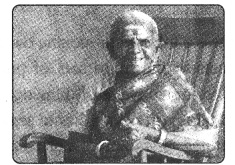
Context & Explanation: Thimmakka and her husband started planting saplings and nurturing them as their own children. Even after the death of her husband, she pursuded her mission with the same determination and courage. She is 100 plus now and still cherishes the dream of planting more trees.
She continues her fight against deforestation. Her contributions are truly remarkable. She proves that age is not a big problem if we aspire to do anything. So, she is a true inspiration to us to have good intentions towards society. Please plant a sapling and make the world a better place for our children. Even thousand mile journey begins with a single step.
Critical Comment: The words describe her passion for planting trees and expanding her mission.
Paragraph Answer Questions (Section – A, Q.No. 4, Marks : 4)
Question 1.
All great things have humble, small beginnings. Justify the statement based on the life and work of Thimmakka. *(Imp, Model Paper)?
Answer:
Thimmakka had pains and problems in her life. She was poor and not educated. She worked as a coolie. She was not happy because she couldn’t become mother till she was forty. Her husband was very cooperative. The couple Thimmakka and Chikkayya started planting trees in their village in a stretch of 4 km.
They planted 10 banyan saplings in the first year and increased the number year after year. They not only planted them but tended them to maturity. Apart from banyan trees, she planted over 8000 other trees in over 80 years She is a true inspiration to us. She shows us that all great things have humble and small beginnings.
Question 2.
Why did Thimmakka and her husband decide to plant trees? Describe how they tried to succeed in their decision?
Answer:
This inspiring essay describes Thimmakka’s undying passion for planting trees even at an advanced age. It also insists the need to follow her selfless service in preserving and protecting nature.
Thimmakka was a poor and uneducated woman. She was married to Chikkayya. The couple didn’t get children. However, her husband was very supportive of her. With nothing in life to be cherish, Thimmakka thought of ending her life. Then, wisdom dawned.
They decided to plant trees and nurture them as their children. They planted 10 banyan saplings in the first year soon it became their life mission. Year after year the number increased. They not only planted them but tended them to maturity. They also fenced and guarded them. Now there exist around 8000 other trees planted by them.
Question 3.
Who is taking the noble mission of Thimmakka forward and how ?
Answer:
Planting more and more plants is the noble mission of Thimmakka. She expanded her mission from 10 banyan saplings to over 8000 other trees. Her outstanding work earned her the name Saalumarada, which means a row of trees. Now, she is 100 plus.
Her noble mission is taken forward by her faster son, Sri Umesh. He has been planting and tending to trees along the roads, in schools, public places and on the mountains, and hill tops also runs the PRITHVI BACHAO movement successfully. He maintains nursery and distributes plants to the farmers who are interested in growing plants. So, the adopted son adopts her noble mission of planting saplings.
Question 4.
Why was Thimmakka called Saalumarada ?
Answer:
The present internet-based essay, the Green Champion – Thimmakka describes the magnificent achievements of an ordinary woman with an excellent commitment to conserve nature. Thimmakka, a woman more than 100 years in age, from Karnataka has been launded globally as the green champion for her planting mission.
Thimmakka along with her husband planted over 8000 other trees. Even after her husband’s death, she continued her mission of planting trees. Her outstanding work earned her the name Saalumarada, which means a row of trees in Kannada. Thimakka is popular as Saalumarada Thimmakka due to her work. She continues her fight against deforestation. Her contributions are truly remarkable. With her achievements, she is called Saalumarada Thimmakka.
The Green Champion – Thimmakka Summary in English
The present prose piece ‘The Green Champion – Thimmakka’ is an internet-based inspiring article. It describes Thimmakka’s undying passion for the planting trees and insists on the need to emulate her selfless service in preserving nature. Thimmakka, a woman more than 100 years in age, from Karnataka has been landed globally as the Green Champion for her tree planting mission.
She was a poor and not properly educated. She worked as a coolie. She was married to Bikkala Chikkayya, a labourer too.Her married life was not happy. She couldn’t become a mother till she was forty. Her husband was very cooperative. With nothing to be proud, she thought of ending her life. Wisdom dawned. The couple decides to plant saplings and nurture them as their own children.
They not only planted them but also fenced watered and guarded them from animals. They started planting trees in their village in a stretch of 4 km. They planted 10 banyan saplings in the first year and increased the number year after year. Now there are 400 banyan trees in the area. Apart from them there existed over 8000 other trees planted by them. Even after the death of her husband, she continued her mission of planting trees. Her outstanding work earned her the name Saalumarada which means a row of trees in Kannada.
Thimmakka received many awards including the prestigious Padmasri award in 2019. Thimmakka is popular as Saalumarada Thimmakka because of her work. There is also an environmental organisation named after her in the U.S. called Thimmakka’s Resources for Environmental Education. She brought world wide recognition to her state, Karnataka through her incredible services. Hence, she is a true inspiration to us. She is 100 plus and still cherishes the dream of planting more trees in future.
Her mission is taken forward by her foster son, Sri Umesh. He has been planting and tending to trees along the roads, in schools, public places and on the maintain and hilltops. He runs the PRITHVI BACHAO movement successfully. He grows own nursery and distributes plants to the interesting farmers to grow plants. Therefore, Thimmakka has become a role model to the entire world. She urges us the plant even a single sapling to make the world a better place for our future generations. The easy insists on the need to emulate her selfless service in protecting nature.
Meanings and Explanations
champion (n) /tfempion/ (ఛాంపిఅన్ ) (disyllabic) : someone who works for a cause, ఒక ప్రత్యేక పనికై శ్రమించే వ్యక్తి
saalumarada (n-Kannada word): a row of trees, చెట్ల వరుస
conceive (v) /kansi:v / (కన్ సీవ్ ) (disyllabic) : to become pregnant, గర్భము ధరించు
saplings (n-pl) /sep/inz/ (స్యాప్లింగ్ జ్ ) (disyllabic) : young plants, లేత మొక్కలు
stretch (n) /stretf/ (స్ట్రెచ్ ) (monosyllabic) : an area or extent of land, విస్తీర్ణము, ప్రదేశము, స్థలము
challenging (v+ing=adj) / tfelondzi/ (చ్యలంజింగ్ ) (trisyllabic) : difficult, hard to do, కష్టమైన
relatively (adv) /relativli / (రెలటివ్ లి ) (polysyllabic – 4 ) : in relation to, somewhat, పోల్చి చూసినప్పుడు, ఒక మాదిరి
take up (phrase): accept to do some work, ఒక పనిని చేపట్టుట