






Contents
- 1 Short Answer Type Questions
- 2 Question 1.
- 3 Answer:
- 4 Question 2.
- 5 Answer:
- 6 Question 3.
- 7 Answer:
- 8 Question 4.
- 9 Answer:
- 10 Question 5.
- 11 Answer:
- 12 Question 6.
- 13 Answer:
- 14 Question 7.
- 15 Answer:
- 16 Question 8.
- 17 Answer:
- 18 Question 9.
- 19 Answer:
- 20 Question 10.
- 21 Answer:
- 22 Question 11.
- 23 Answer:
- 24 Question 12.
- 25 Answer:
- 26 Question 13.
- 27 Answer:
- 28 Question 14.
- 29 Answer:
- 30 Question 15.
- 31 Answer:
- 32 Question 16.
- 33 Answer:
- 34 Question 17.
- 35 Answer:
- 36 Question 18.
- 37 Answer:
- 38 Question 19.
- 39 Answer:
- 40 Question 20.
- 41 Answer:
- 42 Question 21.
- 43 Answer:
- 44 Question 22.
- 45 Answer:
- 46 Question 23.
- 47 Answer:
- 48 Question 24.
- 49 Answer:
- 50 Question 25.
- 51 Answer:
- 52 Question 26.
- 53 Answer:
- 54 Question 27.
- 55 Answer:
- 56 Question 28.
- 57 Answer:
- 58 Question 29.
- 59 Answer:
- 60 Question 30.
- 61 Answer:
- 62 Question 31.
- 63 Answer:
- 64 Question 32.
- 65 Answer:
- 66 Question 33.
- 67 Answer:
- 68 Question 34.
- 69 Answer:
- 70 Question 35.
- 71 Answer:
- 72 Question 36.
- 73 Answer:
- 74 Question 37.
- 75 Answer:
- 76 Question 38.
- 77 Answer:
- 78 Question 39.
- 79 Answer:
- 80 Question 40.
- 81 Answer:
Short Answer Type Questions
Question 1.
Write about ecological hierarchy.
Answer:
Ecological Hierarchy :
Hierarchy means arrangement into a ‘graded series’. Ecological organization consists of eleven integrative levels, ranging from Cell to Ecosphere – cell, tissue, organ, organ – system, organism, population, community, ecosystem, landscape, biome and ecosphere (also called Biosphere).
Population :
Population is a group of organisms of the same species, living in a specific area at a specific time.
Community :
It is an association of the interacting members of populations of different autotrophic and heterotrophic species in a particular area. In a community, generally one or a few species dominate with reference to their numbers or size.
Ecosystem :
It is the next level of organization above the level of biological community. An ecosystem is a functional unit of the biosphere in which members of the community interact among themselves and with the surrounding environment, involving ‘flow of energy’ forming a well defined trophic structure.
Landscape :
It is the unit of land containing different ecosystems (mosaic of ecosystems) surrounded by natural boundaries. It is the level of organization higher than ‘ecosystem’.
Biome :
A ‘biome’ is a large community of plants and animals that occupies a vast region. There are ‘terrestrial biomes’ and ‘aquatic biomes’.
Ecosphere (Biosphere) :
All the habitable zones on the Earth constitute the ecosphere or biosphere. It is the part of the Earth that supports ‘life’.
Question 2.
Write a note on habitat and medium.
Answer:
Habitat and Medium: Ecologically, habitat is the place in which an organism lives. It is comparable to the ‘address’ of a person (as mentioned in the introduction page to ecology). For instance, the habitat of fish is a pond, lake, sea etc., the habitat of a lion is forest, the habitat of Ascaris is the ‘small intestine’ of man, and so on. The water surrounding the body of a fish is called the medium and the medium of a lion is the air around its body.
Question 3.
Considering the benefits of a constant internal environment to the organism, we tend to ask ourselves ‘why the conformers had not evolved to become regulators’? (T.Q.)
Answer:
Majority (99 percent) of animals cannot maintain a constant internal environment. Their body temperature changes with the ambient (surrounding) temperature. In aquatic animals the osmotic concentration of the body fluids changes along with that of the surrounding water. Such animals are described as conformers. Conformer means adapt from one condition to a new or different conditions.
Thermoregulation is energetically expensive for many organisms. (Animals such as camels can be conformers upto a particular range of temperature and regulator afterwards). Heat loss or heat gain is a function of the surface area.
During the course of evolution, the costs and benefits of maintaining a constant internal environment are taken into consideration.
Question 4.
The individuals who have fallen through the ice and been submerged under cold water for long periods can sometimes be revived – explain. (T.Q.)
Answer:
Many fish thrive in Antarctic waters where the temperature is always below zero. Having realized that the abiotic conditions of many habitats may vary over a time period. One would expect that during the course of millions of years of their existence, many species would have evolved a relatively constant internal environment. It permits all biochemical reactions and physiological functions to proceed with maximal efficiency and thus, enhance the overall fitness of the species. The familiar case of polar bears going into hibernation during winter is an example of escape in time. Some snails and fish go into aestivation to avoid summer related problems- heat and desiccation.
Question 5.
What is summer stratification? Explain. March 2020
Answer:
Summer stratification :
During summer in temperate lakes, the density of the surface water decreases because of increase in its temperature (21-25°C). This ‘upper more warm layer’ of a lake is called epilimnion. Below the epilimnion there is a zone in which the temperature decreases at the rate of 1° C per meter in depth, and it is called thermocline or metalimnion. The bottom layer is the hypolimnion, where water is relatively cool, stagnant and with low oxygen content (due to absence of photosynthetic activity).
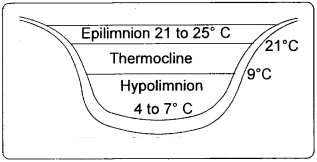
During autumn (also called Fall), the epilimnion cools down, and the surface water becomes heavy when the temperature is 4°C, and sinks to the bottom of the lake. Overturns bring about ‘uniform temperature’ in lakes during that period. This circulation during the autumn is known as the fall or autumn overturn. The upper oxygen rich water reaches the hypoliminion and the nutrient rich bottom water comes to the surface. Thus there is uniform distribution of nutrients and oxygen in the lake.
Question 6.
What is the significance of stratification in lakes? (T.Q.)
Answer:
Temperature variations occur with seasonal changes in the temperate regions. These differences in the temperature form ‘thermal layers’ in water. These phenomena are called thermal stratifications.
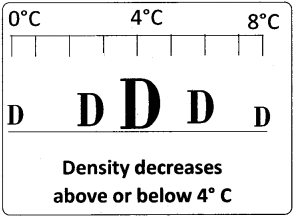
Water shows maximum density at 4°C. Rise or faII of temperatures above or below 4°C decreases its density. This anomalous property of water and the seasonal variations in temperature are responsible for the thermal stratification in temperate lakes.
Due to overturns, there is uniform distribution of nutrients and oxygen in the lake.
Question 7.
Explain van’t Hoff rule. (T.Q.)
Answer:
van’t Hoff’s rule :
van’t Hoff, a Nobel Laureate in thermochemistry, proposed that, with the increase of every 10°C, the rate of metabolic activities doubles. This rule is referred to as the van’t Hoff’s rule, van’t Hoff’s rule can also be stated in reverse saying that the reaction rate is halved with the decrease of every 10°C. The effect of temperature on the rate of a reaction is expressed in terms of temperature coefficient or Q10 value. Q10 values are estimated taking the ratio between the rate of a reaction at X°C and rate of reaction at (X – 10°C). In the ‘living systems’ the Q10 value is about 2.0. If the Q10 value is 2.0, it means, for every 10°C increase, the rate of metabolism doubles.
Question 8.
Unlike mammals the reptiles cannot tolerate environmental fluctuations in temperature. How do they adapt to survive in desert conditions? (T.Q.)
Answer:
Some organisms show behavioural responses to cope with variations in their environment. Desert lizards manage to keep their body temperature fairly constant by behavioural means. They ‘bask’ (staying in the warmth of sunlight) in the sun and absorb heat when their body temperature drops below the comfort zone, but move into shade when the temperature starts increasing. Some species are capable of burrowing into the soil to escape from the excessive heat above the ground level.
Question 9.
Write a short note on soil as an ecological abiotic factor.
Answer:
Soil :
The nature and properties of soil in different places vary depending on the climate, and the ‘weathering’ processes involved. Various characteristics of the soil such as soil composition, grain size and aggregation determine the percolation and water-holding capacity of the soils. These characteristics, along with the parameters such as pH, mineral composition etc., determine to a large extent the vegetation in any area. This in turn dictates the type of aninmals that can be supported. Similarly, in the aquatic environment, the sediment-characteristics often determine the type of benthic animals that can live there. ‘
Question 10.
How do terrestrial animals protect themselves from, the danger of dehydration of bodies? (T.Q.)
Answer:
In the absence of an external source of water, the kangaroo rat of the North American deserts is capable of meeting all its water requirements through oxidation of its internal fat (in which water is a by product – metabolic water). It also has the ability to concentrate its urine, so that minimal volume of water is lost in the process of removal of their excretory products.
Question 11.
How do marine animals adapt to hypertonic seawater? (T.Q.)
Answer:
Seawater is high in salt content compared to that of the body fluids. So, the marine animals continuously tend to lose water from their bodies by exosmosis and face the problem of dehydration. To overcome the problem of water loss, marine fishes have aglomerular kidneys with less numbers of nephrons. Such kidneys minimize the loss of water through urine. To compensate water loss the marine fish drink more water, and along with this water, salts are added to the body fluids and disturb the internal equilibrium.
To maintain salt balance (salt homeostasis) in the body, they have salt secreting chloride cells in their gills. Marine birds like sea gulls and penguins eliminate salts in the form of salty fluid that drips through their nostrils. In turtles the ducts of chloride secreting glands open near the eyes. Some cartilaginous fishes retain urea and trimethylamine oxide (TMO) in their blood to keep the body fluid isotonic to the sea water and avoid dehydration of the body due to exosmosis.
Question 12.
Discuss the various types of adaptations in freshwater animals. (T.Q.)
Answer:
Adaptations in freshwater habitat :
Animals living in freshwaters have to tackle the problem of endosmosis. The osmotic pressure of freshwater is very low and that of the body fluids of freshwater organisms is much higher. So water tends to enter into bodies by endosmosis. To maintain the balance of water in the bodies, the freshwater organisms acquired several adaptations such as, contractile vacuoles in the freshwater protozoans, large glomerular kidneys in fishes, etc. They send out large quantities of urine, along which some salts are also lost.
To compensate the ‘salt loss’ through urine, freshwater fishes have salt absorbing ‘chloride cells’ in their gills. The major problem in freshwater ponds is – in summer most of the ponds dry up. To overcome this problem most of the freshwater protists undergo encystment. The freshwater sponges produce asexual reproductive bodies, called gemmules, to tide over the unfavourable conditions of the summer. The ‘African lungfish’, Protopterus, burrows into the mud and forms a ‘gelatinous cocoon’ around it, to survive, in summer.
Question 13.
Compare the adaptations of animals with freshwater and seawater mode of life. (T.Q.)
Answer:
Seawater is high in salt content compared to that of the body fluids. So, the marine animals continuously tend to lose water from their bodies by exosmosis and face the problem of dehydration. To overcome the problem of water loss, marine fishes have aglomerular kidneys with less numbers of nephrons. Such kidneys minimize the loss of water through urine. To compensate water loss the marine fish drink more water, and along with this water, salts are added to the body fluids and disturb the internal equilibrium. To maintain salt balance (salt homeostasis) in the body, they have salt secreting chloride cells in their gills.
Marine birds like sea gulls and penguins eliminate salts in the form of salty fluid that drips through their nostrils. In turtles the ducts of chloride secreting glands open near the eyes. Some cartilaginous fishes retain urea and trimethylamine oxide (TMO) in their blood to keep the body fluid isotonic to the sea water and avoid dehydration of the body due to exosmosis.
Adaptations in freshwater habitat :
Animals living in freshwaters have to tackle the problem of endosmosis. The osmotic pressure of freshwater is very low and that of the body fluids of freshwater organisms is much higher. So water tends to enter into bodies by endosmosis. To maintain the balance of water in the bodies, the freshwater organisms acquired several adaptations such as, contractile vacuoles in the freshwater protozoans, large glomerular kidneys in fishes, etc. They send out large quantities of urine, along which some salts are also lost. To compensate the ‘salt loss’ through urine, freshwater fishes have salt absorbing ‘chloride cells’ in their gills.
The major problem in freshwater ponds is – in summer most of the ponds dry up. To overcome this problem most of the freshwater protists undergo encystment. The freshwater sponges produce asexual reproductive bodies, called gemmules, to tide over the unfavourable conditions of the summer. The ‘African lungfish’, Protopterus, burrows into the mud and forms a ‘gelatinous cocoon’ around it, to survive, in summer.
Question 14.
Distinguish between euryhaline and stenohaline animals. (T.Q.)
Answer:
For aquatic organisms the quality (chemical composition, pHr etc.,) of water becomes important. The salt concentration is less than 5 percent in inland, waters, and 30 – 35 percent in the sea water. Some organisms are tolerant to a wide range of salinities (euryhaline), but others are restricted to a narrow range (stenohaline). Many freshwater animals cannot live for long in sea water and vice versa because of the osmotic problems, they would face.
The animals of brackish water are adapted to withstand wide fluctuations in salinity. Such organisms are called euryhaline animals and those that can’t withstand are known as stenohaline.
Question 15.
How do the non migratory animals overcome the unfavourable climatic conditions?
Answer:
In bacteria, fungi and lower plants, various kinds of thick-walled spores are formed which help them survive unfavourable conditions. They germinate (come out of the spore wall and produce a normal active organism) on the return of suitable environmental conditions.
Some animals can avoid the stress by escaping in ‘time’ (migration is escaping in ‘space’). The familiar case of ‘polar bears’ going into hibernation during winter is an example of escape in time. Some snails and fish go into aestivation to avoid summer-related problems – heat and desiccation.
Diapause :
Certain organisms show delay in development, during periods of unfavourable environmental conditions and spend some period in a state of ‘inactiveness’ called ‘diapause’. This dormant period in animals is a mechanism to survive extremes of temperature, drought, etc. It is seen mostly in insects and embryos of some fish. Under unfavourable conditions many zooplankton species in lakes and ponds are known to enter diapause.
Question 16.
Many tribes living in high altitude of Himalayas normally have higher red blood cell count (or) total haemoglobin that the people living in the plains. Explain. (T.Q.)
Answer:
Pressure is another factor that changes dramatically with depth in the ocean. Organisms on land face less than one ‘atmosphere’ of pressure at the sea level. Since water is much heavier than air, marine organisms are under much more pressure than those pn land. The pressure in water increases at the rate of 1 atmosphere per 10m depth. The organisms living in such extreme environments show a wide range of biochemical adaptations. Some organisms possess adaptations that are physiological and allow them to respond quickly to a stressful situation. If you had ever been to any high altitude place (e.g. > 3,500m Rohtang Pass near Manali and Manasarovar, in Tibet) you must have experienced what is called altitude sickness.
Its symptoms include nausea (vomiting sense), fatigue (tiredness) and heart palpitations (abnormality in heart beat). This is because in the low atmospheric pressure of high altitudes, the body does not get enough oxygen. But, you gradually get acclimatized and overcome the altitude sickness. How did your body solve this problem ? The body compensates low oxygen availability by increasing red blood cell production and increasing the rate of breathing. (Note : decreasing the binding capacity of haemoglobin).
Question 17.
An orchid plant is growing on the branch of mango tree. How do you describe this interaction between the orchid and mango tree? (T.Q.)
Answer:
This is an interaction called commensalism in which one species benefits and the other is neither harmed nor benefited. An orchid growing as an epiphyte on mango branch, gets the benefit of exposure to hight, while the mango tree does not derive any noticeable benefit.
Question 18.
Do you believe that an ideal parasite should be able to thrive within the host without harming it? Then why didn’t natural selection lead to the evolution of such totally harmless parasites?
Answer:
No. I don’t believe that an ideal parasite should be able to thrive within the host without harming it. It is not possible.
Considering that the parasitic mode of life ensures free ‘lodging’ and ‘meals’, it is not surprising that parasitism has evolved in so many taxonomic groups from plants to higher vertebrates. Many parasites have evolved to be host – specific (they can parasitize only a specific species of host) in such a way that both host and the parasite tend to co – evolve; that is, if the host evolves special mechanisms for rejecting or resisting the parasite, the parasite has to evolve mechanisms to ‘counteract’ and ‘neutralize1 them, in order to continue successful parasitic relationship with the same host species. In order to lead successful parasitic life, parasites evolved special adaptations, such as.
a) loss of sense organs b) loss of digestive system and presence of high reproductive capacity c) presence of adhesive organs such as suckers and hooks d) complex life cycle.
Question 19.
The female mosquito is not considered completely a parasite, although it needs our blood for reproduction. Can you explain why?
Answer:
Considering that the parasitic made of life ensures free lodging and meals, it is not surprising that parasitism has evolved in so many taxonomic groups from plants to higher vertebrates. Many parasites have evolved to be host specific (they can parasitize only a specific species of host) in such a way that both host and the parasite tend to co-evolve, that is, if the host evolves special mechanism for rejecting or resisting the parasite, the parasite has to evolve mechanism to counteract and neutralise them, in order to continue successful parasitic relationship with the same host species.
The female mosquito is not considered completely a parasite although it needs our blood for reproduction as warm conditions are necessary to stimulate the production of eggs, because it otherwise had a semi independent and free life as it is a temporary ecto parasite. It needs no shelter, no anaerobic respiration.
Question 20.
Predation is not an association. Support the statement. (T.Q.)
Answer:
Predation :
We think of predation as nature’s way of transferring the energy fixed by plants to higher trophic levels. When we think of predatorand prey, most probably it is the tiger and the deer that readily come to our mind, but a sparrow eating any seed is also a type of predator (a seed predator also called granivore). Although animals eating plants are categorized separately as herbivores, they are, in a broad ecological context, not very different from predators.
Besides acting as ‘conduits’ / ‘pipelines’ for energy transfer across trophic levels, predators play other important roles. They keep the prey populations under control. In the absence of predators, the prey species could achieve very high population densities and cause instability in the ecosystem. Predators have different types of functions to play in nature. They include :
a) Predator as ‘a biological control b) Predators maintain species diversity c) Predators are prudent pertaining to preys.
Question 21.
Assigning the sign ‘+’ for beneficial, for detrimental, and ‘O’ for neutral interactions. Explain the different types of interspecific interactions in an ecosystem.
Answer:
Inter-specific interactions arise from the interaction of populations of two different species. They could be beneficial, detrimental or neutral (neither harmful nor beneficial) to one of the species or both. Assigning a ‘+’ sign for beneficial interaction,’-‘ sign for detrimental and ‘O’ for neutral interaction, let us look at all the possible outcomes of inter-specific interactions.
Population Interactions – Types
| Name of Interaction | Species A | Species B |
| Mutualism | + | + |
| Competition | _ | _ |
| Predation | + | _ |
| Parasitism | + | _ |
| Commensalism | + | 0 |
| Amensalism | _ | 0 |
Question 22.
Predation has a significant role in maintaining of species diversity – discuss.
Answer:
Predators maintain ‘species diversity’: Predators also help in maintaining species diversity in a community, by reducing the intensity of competition among competing prey species. In the rocky intertidal communities of the American Pacific Coast, the starfish Pisaster is an important predator. In a field experiment, when all the starfish were removed from an enclosed intertidal area, more than 10 species of invertebrates became extinct within a year, because of increased inter-specific competition.
Question 23.
What is the biological principle behind the biologiqal control method of managing pest insects? (T.Q.)
Answer:
Predator as a biological control: The prickly pear cactus introduced intcTAustralia in the early 1920s caused havoc by spreading rapidly into millions of hectares of rangeland (vast natural grass lands). Finally, the invasive cactus was brought under control only after a cactus feeding predator (a moth) was introduced into the country. Biological control methods adopted in agricultural pest control are based on the ability of the predators to regulate prey populations.
Question 24.
Name important defence mechanisms in plants against herbivory.
Answer:
For plants, herbivores are the predators. Nearly 25 percent of all insects are known to be phytophagous (feeding on plant sap and other parts of plants). The problem is particularly severe for plants because, unlike animals, they cannot escape from their predators. Plants therefore have evolved a variety of morphological and chemical defences against herbivores.
1.Thoms (Acacia, Cactus, etc.,) are the most common morphological means of defense. Many plants produce and store chemicals that make the herbivore sick when they are eaten, inhibit feeding or digestion, disrupt its reproduction or even kill it.
2.You must have seen the weed Calotropis growing in abandoned fields. The plant produces highly poisonous cardiac glycosides and that is why you never see any cattle or goats browsing on this plant.
3.A wide variety of chemical substances that we extract from plants on a commercial scale (nicotine, caffeine, quinine, strychnine, opium, etc.,) are produced by them actually as defences against grazers and browsers.
Question 25.
Discuss competitive release. (T.Q.)
Answer:
Competitive release :
Another evidence for the occurrence of competition in nature comes from what is called ‘competitive release’. Competitive release occurs when one of the two competing species is removed from an area, thereby releasing the remaining species from one of the factors that limited its population size. A species, whose distribution is restricted to a small geographical area because of the presence of a competitively superior species, is found to expand its distributional range dramatically when the competing species is experimentally removed. This is due to the phenomenon called ‘competitive release’.
Connell’s ‘field experiments’ showed that, on the rocky sea coasts of Scotland, the larger and competitively superior barnacle Balanus dominates the intertidal area, and excludes the smaller barnacle Chathamalus from that zone. When the dominant one is experimentally removed, the populations of the smaller ones increased. In general, herbivores and plants appear to be more adversely affected by competition than the carnivores.
Question 26.
Write a short note on the parasitic adaptations. (T.Q.)
Answer:
In order to lead successful parasitic life, parasites evolved special adaptations such as
1.Loss of sense organs (which are not necessary for most parasites).
2.Presence of adhesive organs such as suckers, hooks to cling on to the host’s body parts.
3.Loss of digestive system and presence of high reproductive capacity.
4.The life cycles of parasites are often complex, involving one or two intermediate hosts or vectors to facilitate parasitisation of their primary hosts.
eg : 1 : The human liver fluke depends on two intermediate (secondary ) hosts (a snail and fish) to complete its life cycle.
e.g. – 2 : The malaria parasite needs a vector (mosquito) to spread to other hosts.
Question 27.
Explain brood parasitism with a suitable example. (T.Q.)
Answer:
Brood parasitism :
Certain birds are fascinating examples of a special type of parasitism, in which the parasitic bird lays its eggs in the nest of its host and lets / allows the host incubates them. During the coruse of evolution, the eggs of the parasitic bird have evolved to resemble the host’s egg in size and colour to reduce the chances of the host bird detecting the foreign eggs and ejecting them from the nest, eg: Cuckoo (Koel) laying its eggs in crow’s nest.
Question 28.
How do predators act as biological control? (T.Q.)
Answer:
Predator as a biological control: The prickly pear cactus introduced into Australia in the early 1920s caused havoc by spreading rapdily into millions of hectares of rangeland (vast natural grass lands). Finally, the invasive cactus was brought under control only after a cactus feeding predator (a moth) was introduced into the country. Biological controlmethods adopted in agricultural pest control are based on the ability of the predators to regulate prey populations.
Question 29.
Explain the interaction mechanism between fig trees and wasps.
Answer:
In many species of fig trees, there is a one-to-one relationship with the pollinator species of wasp. It means that a given fig species can be pollinated only by its ‘partner’ wasp species and no other species. The female wasp uses the fruit not only as a site for oviposition (egg-laying site), but also uses the developing seeds within the fruit for nourishing its larvae. The wasp pollinates the flowers of the fig plant while searching for suitable egg-laying sites. In return for the favour of pollination the fig offers the wasp some of its developing seeds, as food for the developing wasp larvae.
Question 30.
Write notes on the structure and functioning of an ecosystem. (T.Q.)
Answer:
An ‘ecosystem’ is a functional unit of nature, where living organisms interact among themselves and also with the surrounding physical environment. Ecosystem varies greatly in size from a small pond to a large forest or a sea. Many ecologists regard the entire biosphere as a ‘global ecosystem’, as a composite of all local ecosystems on Earth. Since this system is too big and complex to be studied at one time, it is convenient to divide it into two basic categories, namely natural and artificial. The natural ecosystems include aquatic ecosystems of water and terrestrial ecosystems of the land. Both types of natural and artificial ecosystems have several subdivisions.
Question 31.
Explain the different types of aquatic ecosystems.
Answer:
Aquatic Ecosystems :
Based on the salinity of water, three types of aquatic ecosystems are identified marine, freshwater, and estuarine.
i) The Marine Ecosystem :
It is the largest of all the aquatic ecosystems. It is the most stable ecosystem.
ii) Estuarine Ecosystem :
Estuary is the zone where river joins the sea. Sea water ascends up into the river twice a day (effect of high tides and low tides). The salinity of water in an estuary also depends on the seasons. During the rainy season out flow of river water makes the estuary less saline and the opposite occurs during the summer. Estuarine organisms are capable of withstanding the ‘fluctuations’ in salinity.
iii) The Freshwater Ecosystem :
The freshwater ecosystem is the smallest aquatic ecosystem. It includes rivers, lakes, ponds, etc. It is divided into two groups – the lentic and lotic. The still water bodies like ponds, lakes, reservoirs, etc., fall under the category of lentic ecosystems. The communities of the above two types are called lentic and lotic communities respectively. The study of freshwater ecosystem is called as limnology.
Question 32.
Explain the different types of terrestrial ecosystems. (T.Q.)
Answer:
The Terrestrial Ecosystems: The ecosystems of land are known as terrestrial ecosystems.
Some examples of terrestrial ecosystems are the forest, grassland and desert.
i) The Forest Ecosystems :
The two important types of forests seen in India are i) tropical rain forest and ii) tropical deciduous forests.
ii) The Grassland Ecosystems :
These are present in the Himalayan region in India. They occupy large areas of sandy and saline soils in Western Rajasthan.
iii) Desert Ecosystems :
The areas having less than 25 cm rainfall per year are called deserts. They have characteristics flora and fauna. The deserts can be divided into two types – hot type and cold type deserts. Thar Desert in Rajasthan is the example for hot type of desert. Cold type desert is seen in Ladakh.
Question 33.
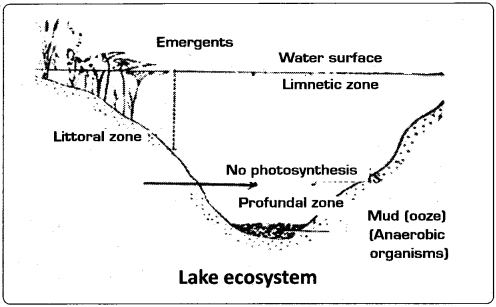
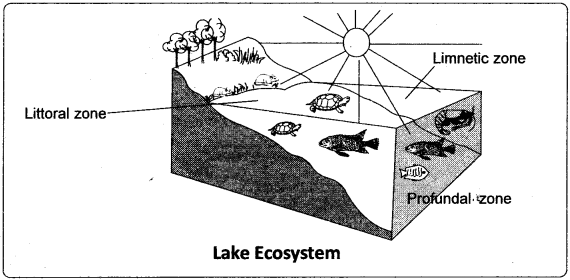
Draw a diagram of the lake ecosystem and its physical or ecological divisions.
Answer:
Question 34.
Write about the producers of the littoral zone with suitable examples.
Answer:
Producers of the littoral zone :
Littoral zone is rich with pedonic flora (especially up to the depth of the effective light penetration). At the shore proper emergent vegetation is abundant with firmly fixed roots in the bottom of the lake and shoots and leaves are exposed above the level of water. These are amphibious plants. Certain emergent rooted plants of littoral zone are the cattails (Typha), bulrushes (Scirpus), arrowheads (Sagittaria). Slightly deeper are the rooted plants with floating leaves, such as the water lilies (Nymphaea), Nelumbo, Trapa, etc. Still deeper are the submerged plants such as Hydrilla, Chara, Potamogeton, etc. The free floating vegetation includes Pistia, Wolffia, Lemna (duckweed), Azolla, Eichhornia, etc.
The phytoplankton of the littoral zone composed of diatoms (Coscinodiscus, Nitzschia, etc.), green algae (Volvox, Spirogyra, etc.), euglenoids (Euglena, Phacus, etc.), and dinoflagellates (Gymnodinium, Cystodinium, etc.).
Question 35.
Write a short note on the limnetic zone of a lake ecosystem.
Answer:
Limnetic zone :
It is the open water zone away from the shore. It extends up to the effective light penetration level, vertically. The imaginary line that separates the limnetic zone from the profundal zone is known as zone of compensation/ compensation point / light compensation level. It is the zone of effective light penetration. Here the rate of photosynthesis is equal to the rate of respiration. Limnetic zone has no contact with the bottom of the lake.
Biota of the limnetic zone :
Limnetic zone is the largest zone of a lake. It is the region of rapid variations of the level of the water, temperature, oxygen availability, etc., from time to time. The chief autotrophs of this region are the phytoplankton such as the euglenoids, diatoms, cyanobacteria, dinoflagellates and green algae. The consumers of the limnetic zone are the zooplanktonic organisms such as the copepods. Fishes, frogs, water snakes, etc., form the limnetic nekton.
Question 36.
Write a short note on the profundal zone of a lake ecosystem.
Answer:
Profundal zone :
It is the deep water area present below the limnetic zone and beyond the depth of effective light penetration. Light is absent. Photosynthetic organisms are absent and so the water is poor in oxygen content. It includes mostly the anaerobic organisms which feed on detritus.
The organisms living in lentic habitat are classified into pedonic forms, which live at the bottom of the lake and those living in the open waters of lakes, away from the shore vegetation are known as limnetic forms.
Biota of the profundal zone :
It includes the organisms such as decomposers (bacteria), chironomid larvae, Chaoborus (phantom larva), red annelids, clams, etc., that are capable of living in low oxygen levels. The decomposers of this zone decompose the dead plants and animals and release nutrients which are used by the biotic communities of both littoral and limnetic zones.
Question 37.
Give a brief account of a lake ecosystem.
Answer:
The lake ecosystem performs all the functions of any ecosystem and of the biosphere as a whole, i.e., conversion of inorganic substances into organic material, with the help of the radiant solar.energy by the autotrophs; consumption of the autotrophs by the heterotrophs; decomposition and mineralization of the dead matter to release them back for reuse by the autotrohs (recycling of minerals).
Question 38.
How is a lake ecosystem described as a ‘micro-model’ for the entire biosphere?
Answer:
Lake Ecosystem :
To understand the fundamentals of an aquatic ecosystem, let us take a ‘lake’ as an example. This is fairly a self-sustainable unit and rather a simple, example that explains even the complex interactions that exist in an aquatic ecosystem.
Lakes are large inland water bodies containing standing/still water (Recall: Lentic community). They are deeper than ponds (pond is not an ideal example as it is very shallow). Most lakes contain water throughout the year. In deep lakes, light cannot penetrate more than 200 meters, in depth. They are vertically stratified in relation to light intensity, temperature, pressure, etc., Deep water lakes contain three distinct zones namely, i) littoral zone, ii) limnetic zone, and iii) profundal zone. Hence lake ecosystem is described as a micro model for the entire biosphere.
Question 39.
In GFCs the number of trophic levels is restricted. Give reason.
Answer:
I. Grazing Food Chain (GFC) :
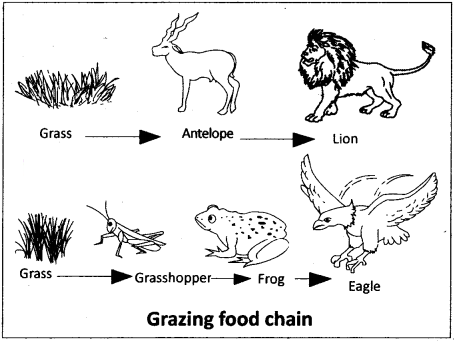
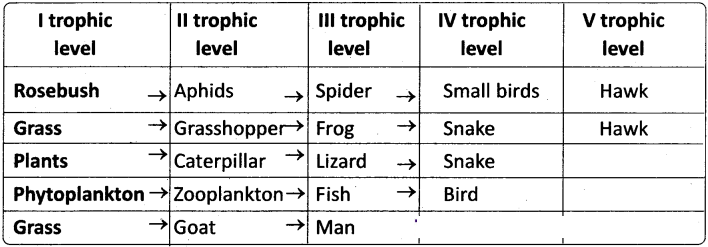
It is also known as predatory food chain. It begins with the green plants (producers) and the second, third and fourth trophic levels are occupied by the herbivores, primary carnivores and secondary carnivores respectively. In some food chains there is yet another trophic level – the climax carnivores. The number of trophic levels in food chains varies from 3 to 5 generally. Some examples for grazing food chain (GFC) are given below.
II. Parasitic food chain :
Some authors included the ‘Parasitic Food Chains’ as a part of the GFC. As in the case of GFCs, it also begins with the producers, the plants (directly or indirectly). However, the food energy passes from large organisms to small organisms in the parasitic chains. For instance, a tree which occupies the 1st trophic level provides shelter and food for many birds. These birds host many ectoparasites and endo-parasites. Thus, unlike in the predator food chain, the path of the flow of energy includes fewer, l^rge sized organisms in the lower trophic levels, and numerous, small sized organisms in the successive higher trophic levels.
Question 40.
What are the ecological limitations for ecological pyramids?
Answer:
Limitations of Ecological Pyramids :
There are certain limitations of ecological pyramids, such as-
1.It does not take into account the same species belonging to two or more trophic levels,
2.It assumes a simple food chain, something that almost never exists in nature,
3.It does not accommodate a food web,
4.moreover, saprophytes are not given any place in ecological pyramids even though they play a vital role in the ecosystem.